
Why Every College Needs an AI Language Lab in 2026
Technical knowledge alone won't get students placed. Here's why AI language labs have become the most important infrastructure investment a college can make in 2026.

In the present-day world, having knowledge of a technical subject does not guarantee success anymore. In fact, organizations prefer hiring individuals with excellent communication skills and confidence in delivering information verbally. However, many graduates still have problems with speaking English and effective communication at work.
Here comes the role of an AI language lab for colleges. By 2026, colleges will face a significant challenge if they do not develop infrastructure for training students in communication. Therefore, traditional techniques will not be enough. Colleges should implement innovative solutions like AI-powered language labs.
The Communication Skills Gap: An Increasing Problem
Even after several years of academic training, most students:
- Feel reluctant to talk in English
- Feel unsure when undergoing an interview
- Have problems communicating in the workplace
- Are unable to express their thoughts effectively
Colleges addressing this gap through structured solutions like an English language lab for colleges see significantly better outcomes.
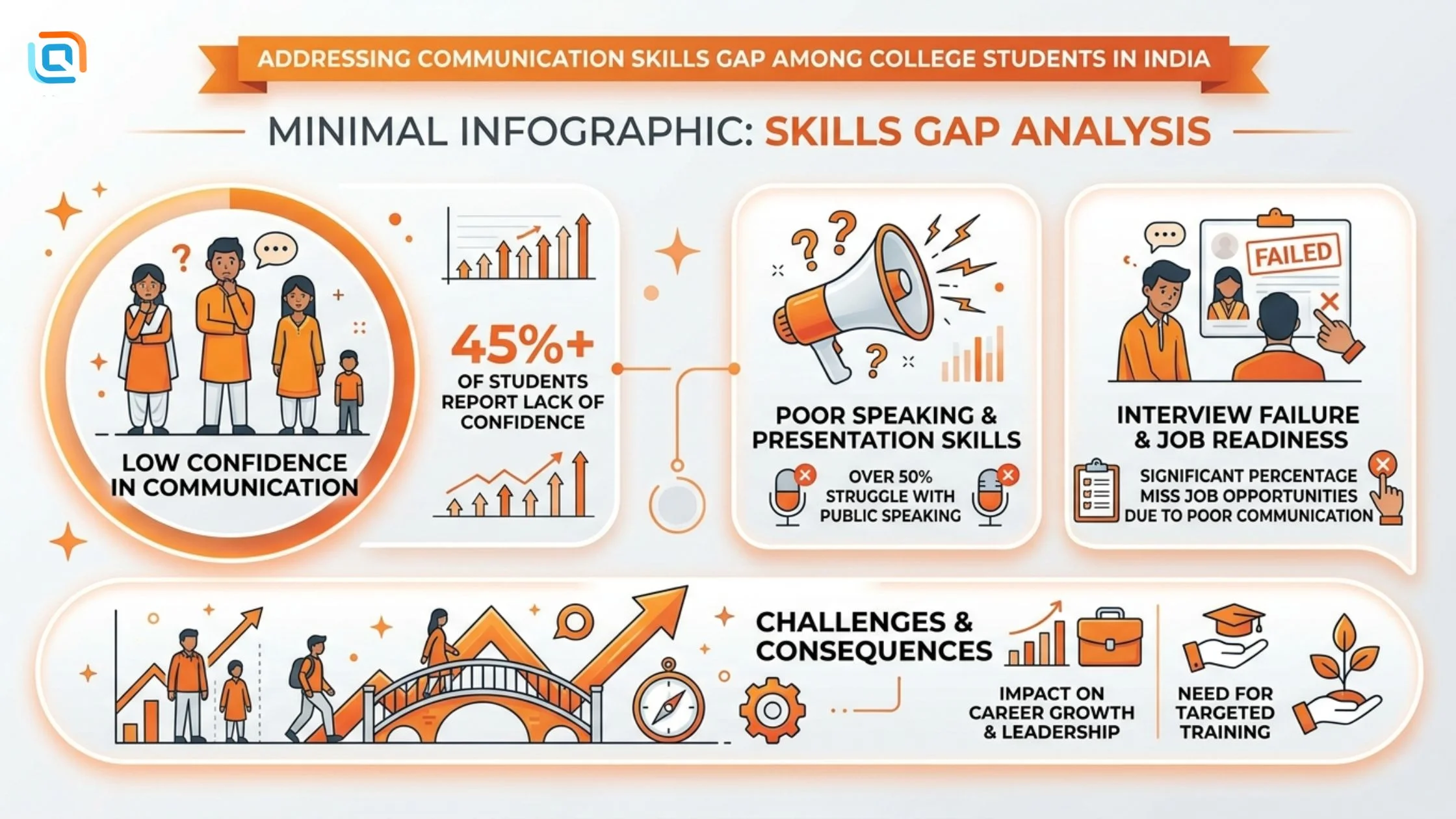
All of these issues directly affect:
- Placement success ratios
- Employer satisfaction levels
- Reputation of educational institutions
It is now expected of colleges to produce graduates who are ready for the industry, rather than merely holding degrees. To understand this foundation better, explore what is an English language lab for colleges.
What Is an AI Language Lab for Colleges?
An AI language lab for colleges is a sophisticated digital tool that leverages the power of artificial intelligence to improve the communication skills of college students in various ways:
- Real-time analysis of speech
- Practicing conversations using AI technology
- Immediate assessment of pronunciations and grammar
- Customized training programs
As opposed to conventional language laboratories, AI-powered technologies are designed to adjust themselves according to individual student performance.
Traditional Language Labs vs AI Language Labs
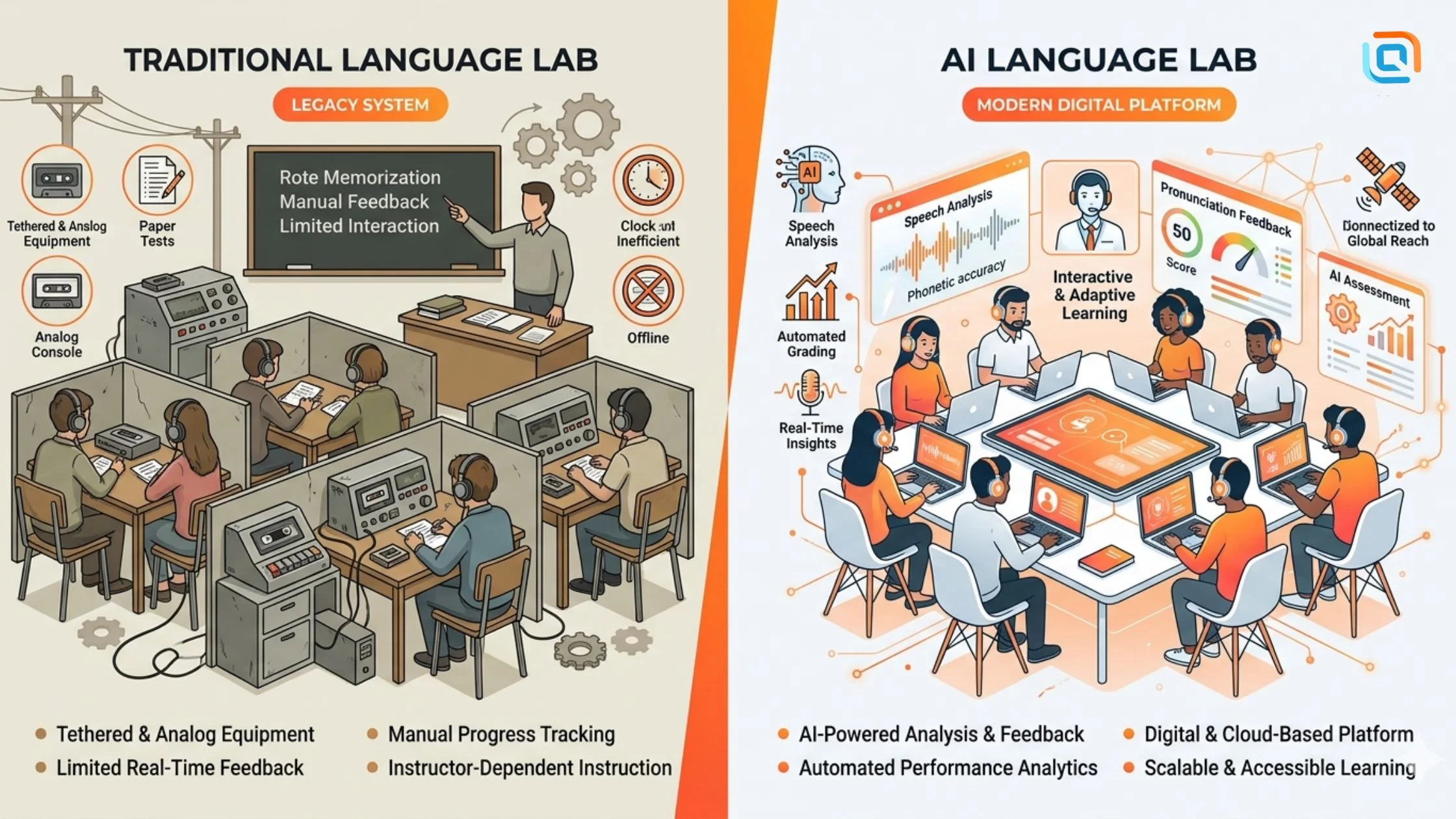
✗ Traditional Language Lab
- — Static content, no personalisation
- — Manual teacher evaluation
- — Low student engagement
- — No instant feedback
✓ AI Language Lab
- ✓ Personalisation at scale
- ✓ Instant response and corrections
- ✓ 24/7 availability for students
- ✓ Data-driven performance tracking
In 2026, dependence on traditional laboratories would mean neglecting the benefits offered by artificial intelligence. To understand the evolution, read digital language lab vs traditional.
How AI Language Labs Enhance Placement Preparation
One of the primary strengths of implementing an AI language lab is its effectiveness in helping students prepare for placements.
1.AI-Driven Interview Preparation
- Answer questions confidently
- Provide structured answers
- Feel less nervous during real interviews
2.Instant Feedback
- Pronunciation accuracy
- Grammar corrections
- Fluency improvements
3.Constant, Personalised Learning
- Practice whenever they want
- Learn at their own pace
- Repeat exercises until fully mastered
4.Trackable Progress Monitoring
- Performance dashboards
- Improvement metrics
- Placement readiness scores
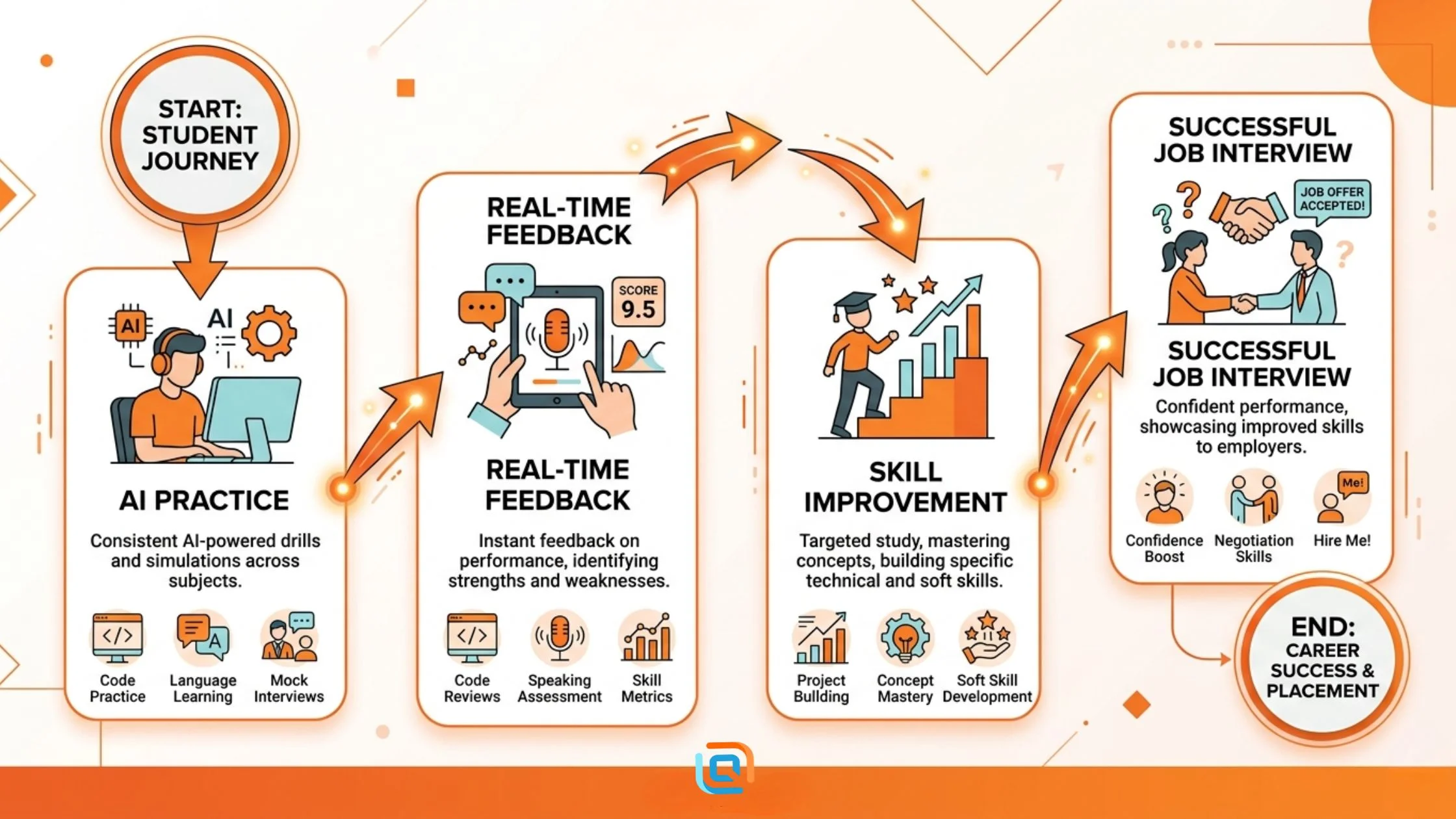
Colleges focused on outcomes should also explore strategies to improve student placement readiness.
The Importance of AI Language Labs in 2026
1. Futuristic Education
AI is reshaping every field — including education. Colleges adopting an AI language lab position themselves as modern, forward-thinking institutions.
2. Scaling Without Increasing Faculty Workload
Manually training hundreds of students is inefficient. AI handles automated assessments and scales training effortlessly without adding faculty burden.
3. Enhanced Student Participation
AI platforms provide interactive modules, real-world simulations, and gamification — leading to higher engagement and measurably better outcomes.
4. Better Placement Outcomes
Poor communication is among the top reasons students lose job opportunities. AI language labs solve this directly — boosting placement success, interview confidence, and self-esteem.
5. Competitive Edge for Institutions
Colleges providing AI-based learning attract more applicants, strengthen industry partnerships, and gain advantages in accreditation and rankings.
Features Institutions Should Consider
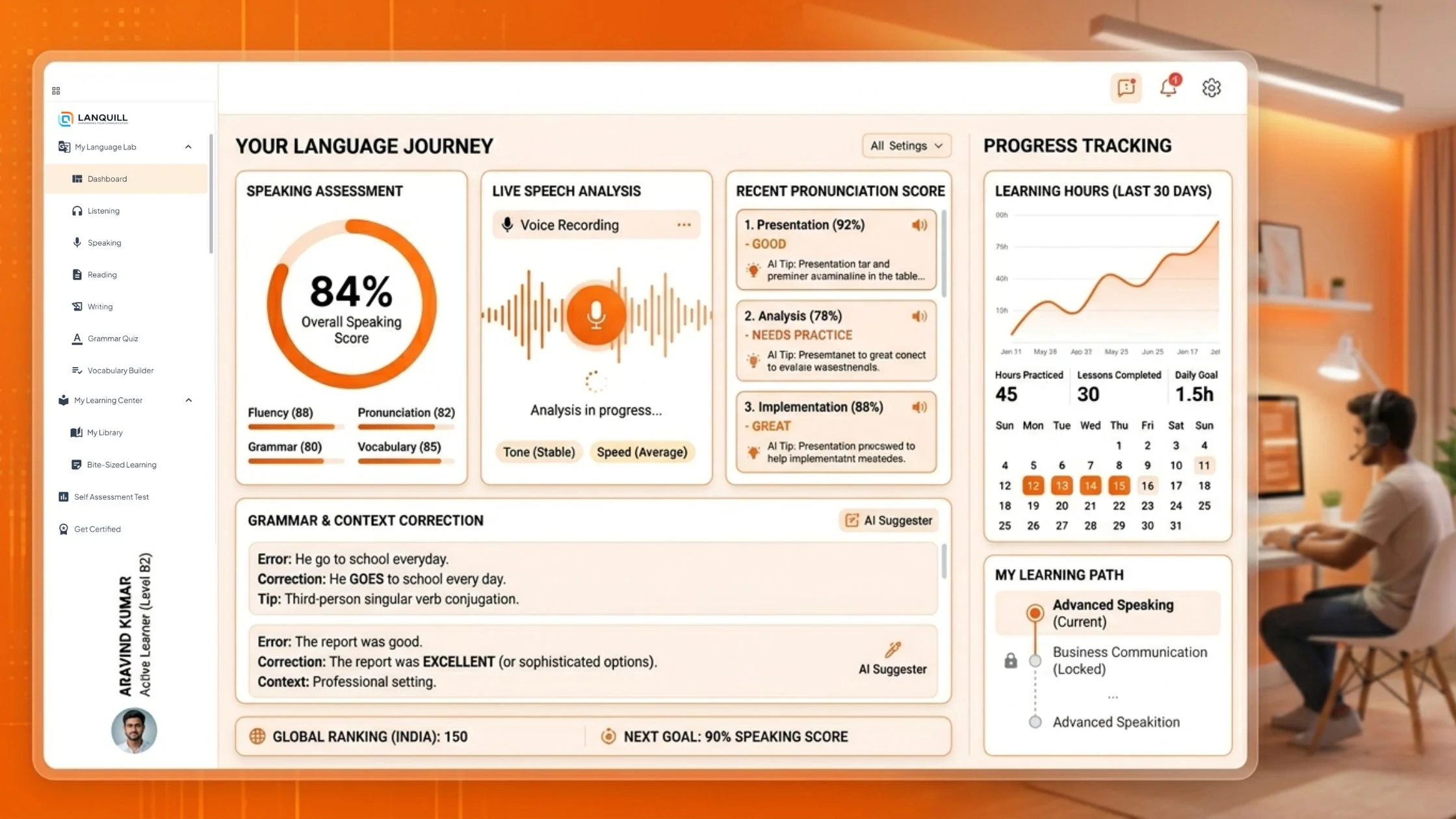
When evaluating solutions, institutions should look for:
Making a Difference: Benefits Colleges Can Reap
With deployment of an AI language lab, colleges will be able to:
- Ensure better communication skills among students
- Improve their placement statistics measurably
- Receive positive responses from employers
- Build and strengthen institutional reputation
It's not just about the technology. It's about the future of your students.
Explore advanced AI-powered language lab solutionsto understand how these features work in real-world scenarios.For a deeper financial perspective, read ROI of language lab software.
Shifting Gears: Learning vs. Employability
Learning no more implies following a syllabus. Students must be equipped with skills to tackle real-world problems. AI language labs for colleges offer students an opportunity to:
- Acquire practical communication skills
- Experience real-life scenarios
- Develop necessary skills continuously

Ready to Elevate Your College's Communication Training?
Schedule a demonstration to discover how Lanquill can revolutionise your institution.
Book a Demo →FAQs
An AI language lab for colleges can be defined as an online platform which makes use of artificial intelligence in order to help improve communication skills by means of feedback, speech analysis, etc.
They improve students' communication skills, confidence, and performance in interviews, hence increasing their chances of successful placement.
Certainly! Conventional labs do not provide such options as personalized learning experience, instant feedback, and scalability.
Definitely! Beginners may also make use of these labs because AI adapts itself to each learning level.
Key features include AI-enabled voice recognition, personalized learning programs, mock interview exercises, faculty dashboards, and seamless curriculum integration.
Related Articles

How Colleges Can Improve Student Placement Readiness
Learn how colleges can improve student placement readiness through communication training, AI tools, and structured learning systems.

What is an English Language Lab for Colleges? Benefits Explained
Learn what an English language lab for colleges is and how it improves communication skills, placement readiness, and student outcomes.
Why Every College Needs an AI Language Lab in 2026
Discover why every college needs an AI language lab in 2026 to improve student communication, placement readiness, and learning outcomes.

From Classroom to Career: How CEFR-Aligned English Courses Build Employability
In today’s globalized job market, strong English communication skills are no longer optional — they’re essential. Educational institutions play a crucial role in helping students bridge the gap between classroom learning and workplace communication.

How Modern English Language Labs Are Transforming Communication Skills in Classrooms
In today’s digital-first academic world, English language proficiency is no longer just a subject- it’s a critical life skill. While traditional spoken English classes have helped many learners, they often lack the structure, interactivity,
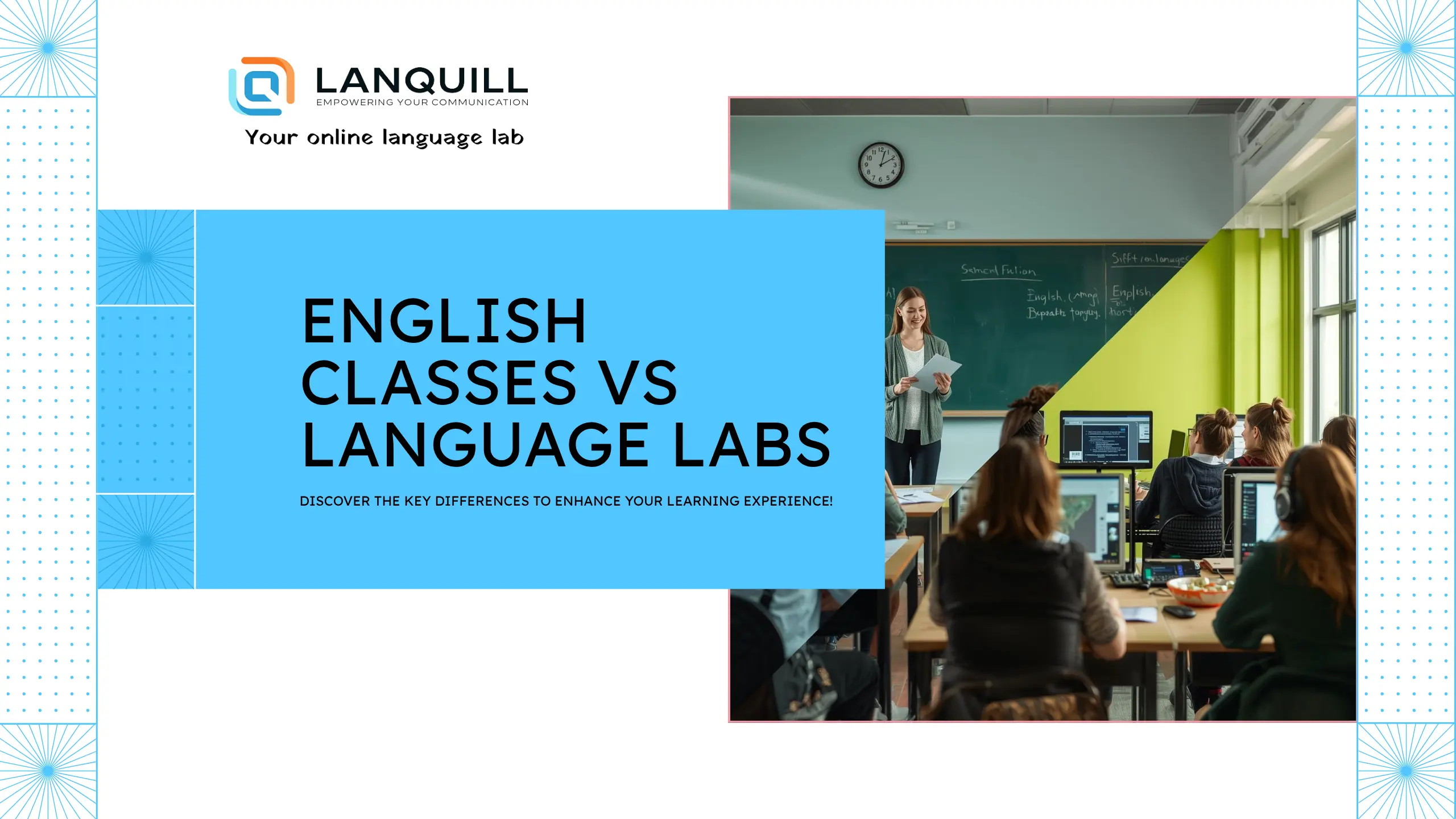
English Spoken Classes vs English Language Lab: Key Differences You Should Know
When it comes to improving spoken English, two popular learning options stand out — English spoken classes and English language labs. Both aim to enhance communication skills, pronunciation, and fluency, but they differ significantly in approach, technology, and results.