
What is an English Language Lab for Colleges? Benefits Explained
Most students know English — but still struggle to communicate. Here's how an English language lab bridges that gap and transforms placement outcomes.

The importance of good communication skills in the present educational scenario cannot be undermined; however, many students find it difficult to communicate effectively in English. This results in poor placement performance.
This is where an English language lab for colleges becomes essential.
With time, colleges are gradually shifting from conventional learning systems and are opting for high-tech tools such as AI language labs to provide effective communication training to the learners.
The importance of a language lab in a college must first be understood by colleges keen on enhancing the employability quotient of their students.
What Is an English Language Lab for Colleges?
The English language lab for colleges refers to the specialised learning process, which is either physical or virtual in nature, aimed at enhancing the communication skills of the learners using technology.
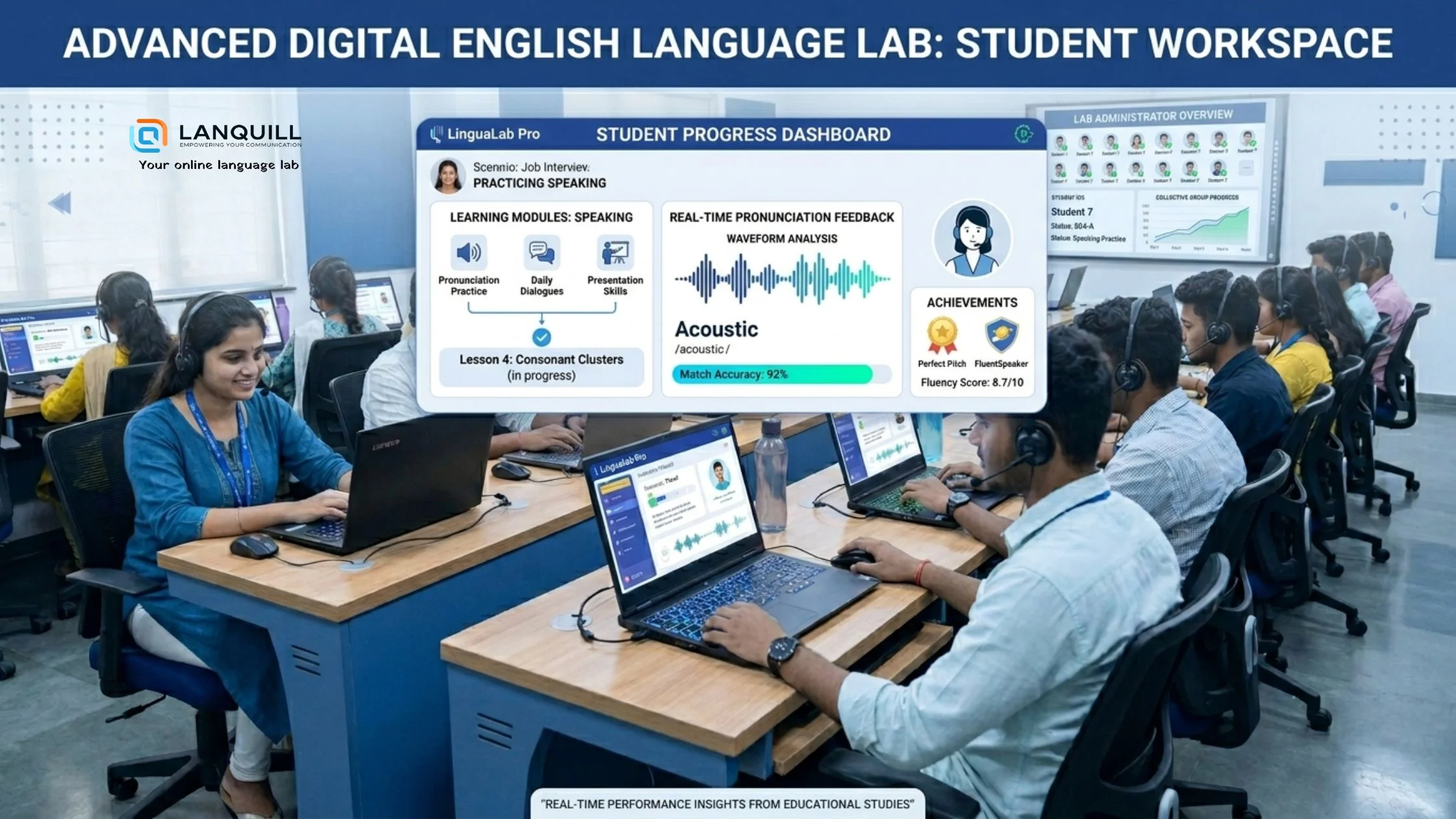
Currently, colleges are incorporating English language lab software, which includes:
Unlike conventional classroom learning, language labs involve practical and experiential training — preparing students for real-world communication challenges.
Importance of Effective Communication Skills for College Students
Modern-day employers do not rely only on grades. Instead, they require candidates who can communicate effectively, lead discussions, and succeed in interviews.
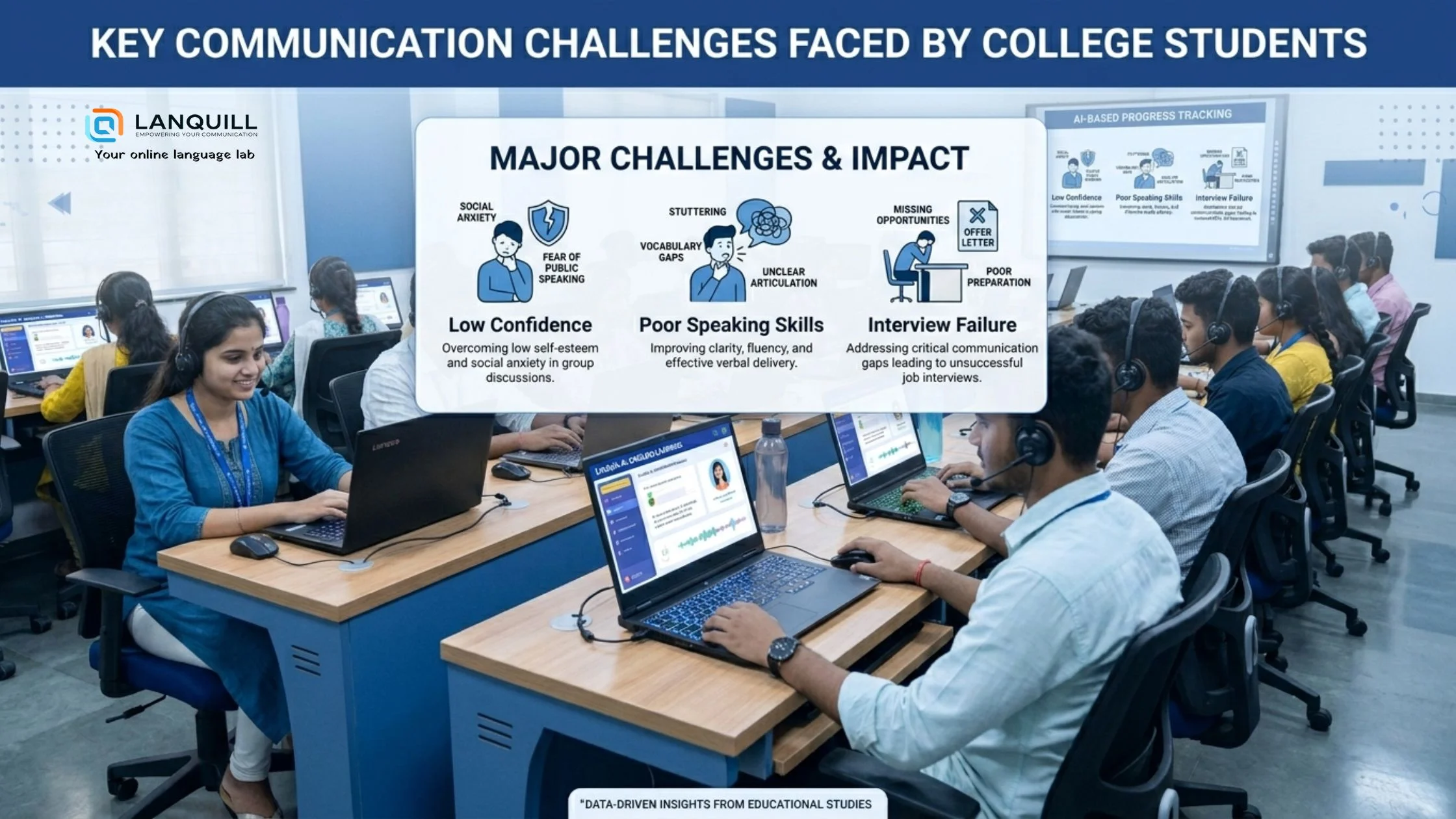
✅ What Employers Need
- ✓ Convey thoughts effectively
- ✓ Interact in discussions
- ✓ Pass interviews confidently
- ✓ Fit into office surroundings
⚠ Student Reality
- — Know English but reluctant to speak
- — Low confidence in interviews
- — Experience communication difficulties
Colleges that address this gap gain a significant advantage in placements and institutional reputation.
Key Advantages of Using an English Language Lab
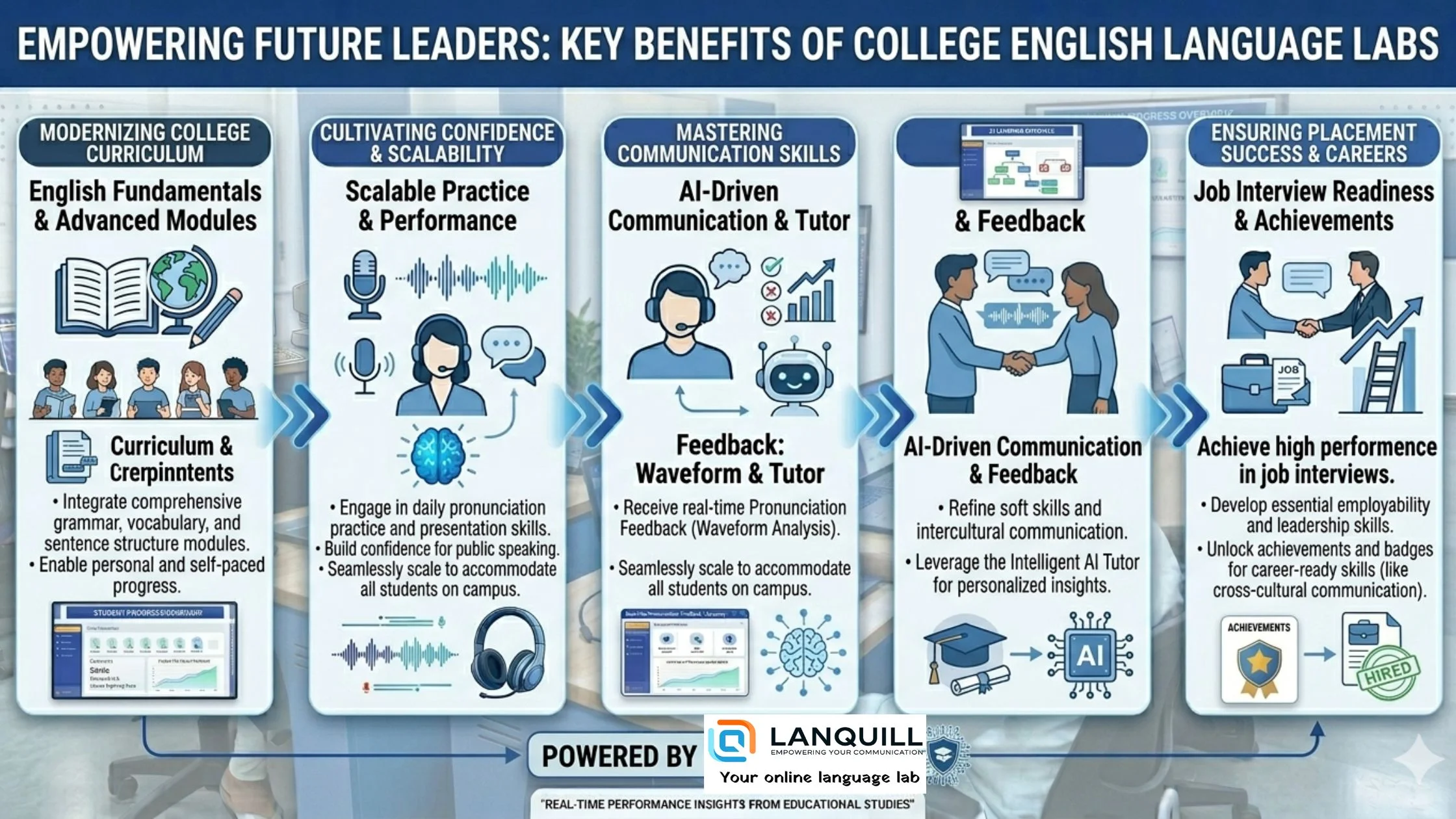
Improvement in Communication Ability
By creating an English language lab in colleges, you can train your students to:
- Speak consistently
- Improve pronunciation and fluency
- Be clear in their communication ability
This leads to stronger overall communication ability.
Enhances Placement Readiness
Communication skills are the primary reason that causes students to fail in job placements during an interview. Using language labs will help you train your students to:
- Practice interview situations
- Feel more confident
- Participate in group discussions
The objective-oriented colleges should take steps to enhance the placement readiness of students by improving their communication skills.
Develop Self-Confidence
Students do not like to speak as they are afraid of making any mistakes. Through consistent practice and training, they will become:
- More confident
- Active participants
- Clear in their thoughts
Allow for Scalability
Training a large number of students on individual basis becomes very difficult for large organizations. However, English language labs provide:
- Standardised training modules
- Scalability for batch-wise training
- Uniform learning experience
Ensure Learning Outcomes
Modern English language labs also ensure that your students can get:
- Measurements of performance
- Skill assessments
- Progress reports
This helps colleges evaluate effectiveness and improve training strategies.
Types of English Language Labs
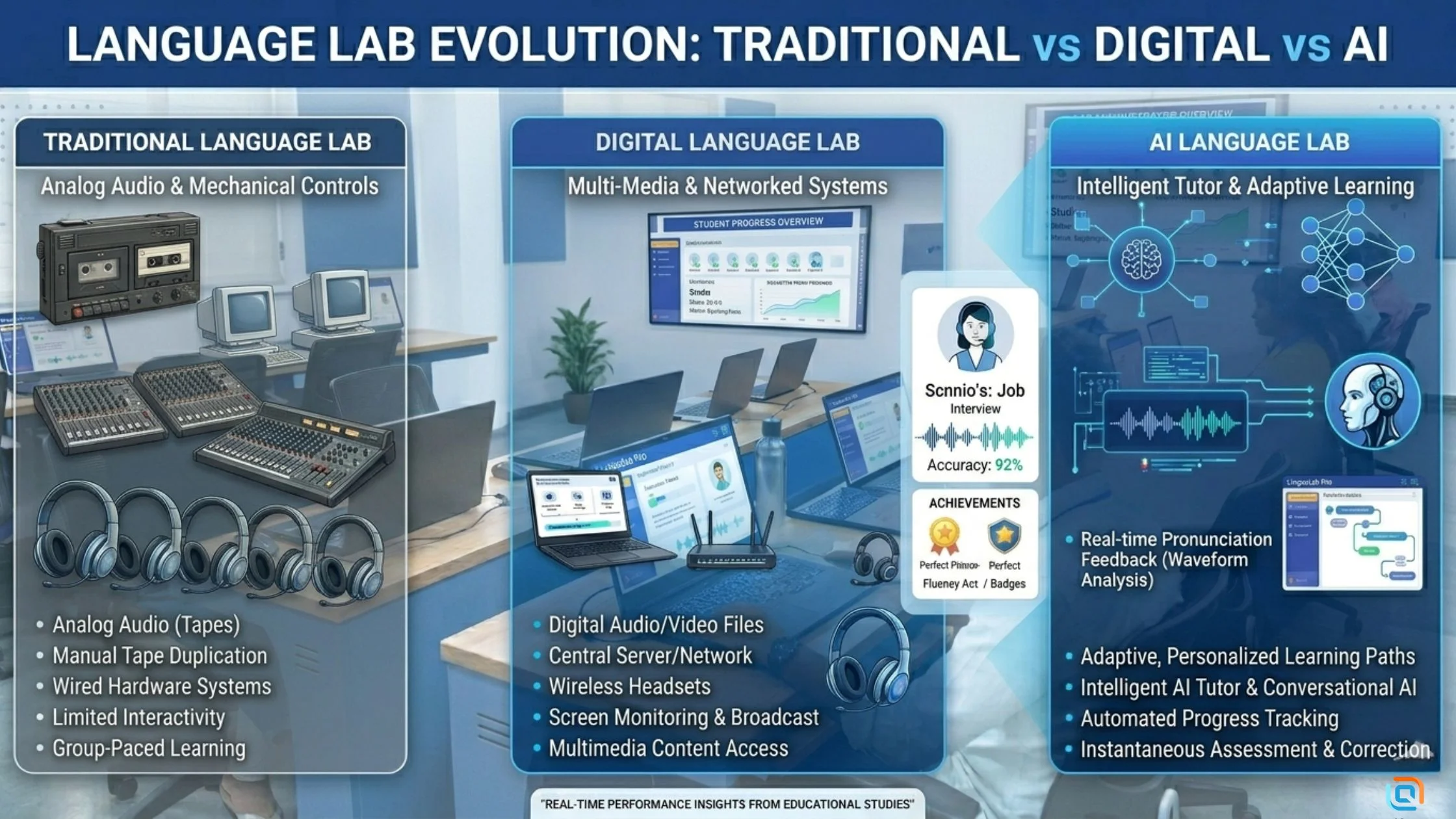
Traditional Language Labs
Physical labs using audio systems, headphones, and recorded lessons — with no adaptive capability.
Digital Language Labs
Software-based tools with interactive modules, multimedia content, and basic progress monitoring.
AI Language Labs
Fully adaptive, AI-powered training — personalised to every learner with real-time feedback.
How an English Language Lab Enhances Placement Success
An English language lab setup within an institution of higher education plays an important role in successful placement.
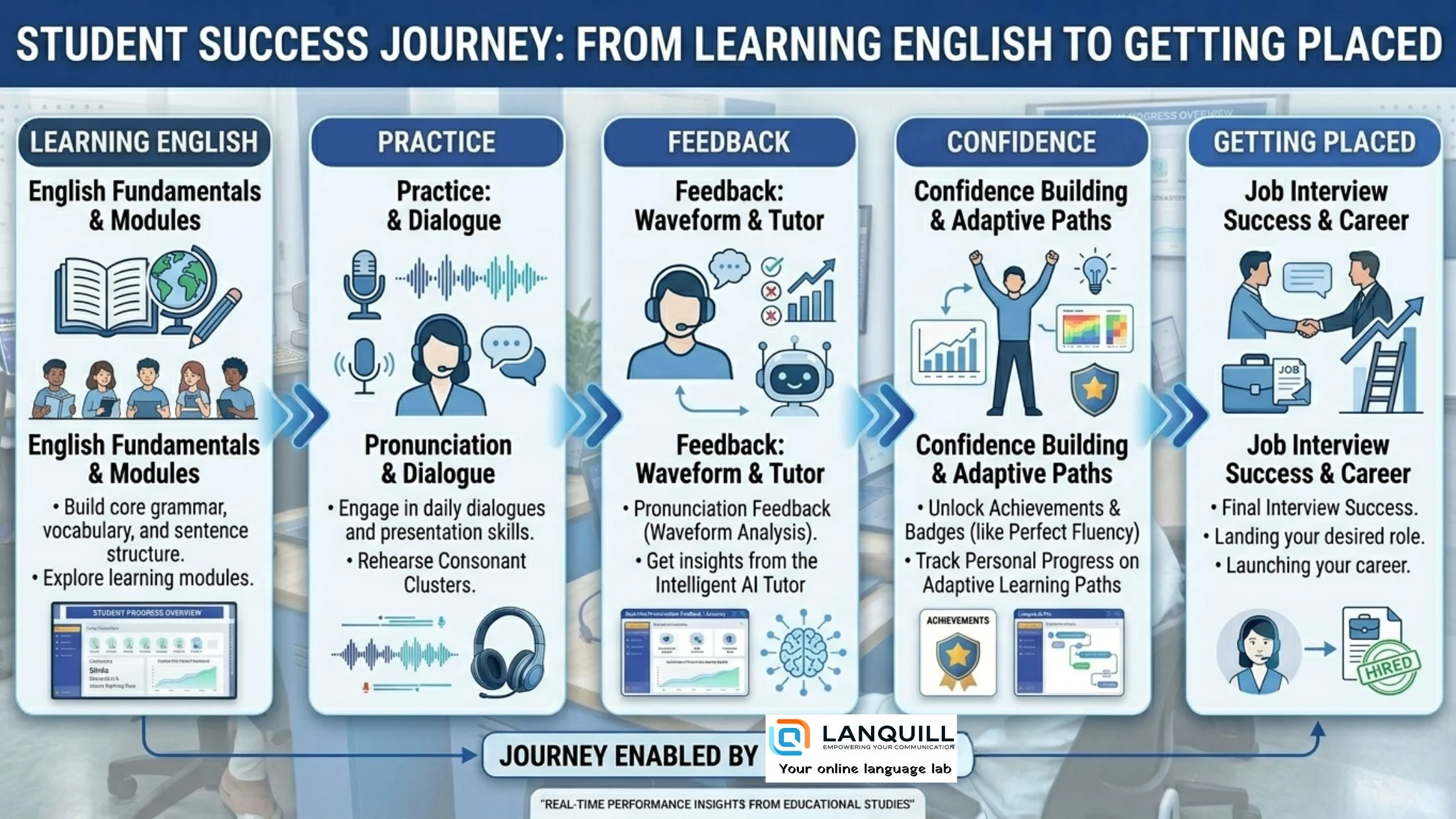
Expected Outcomes
There is consistent success among institutions of higher learning that invest in communication skill development.
Traditional vs AI Language Lab: Which is Better?
Although traditional labs have done a lot of good in the past, the current scenario requires more than what can be offered by them.
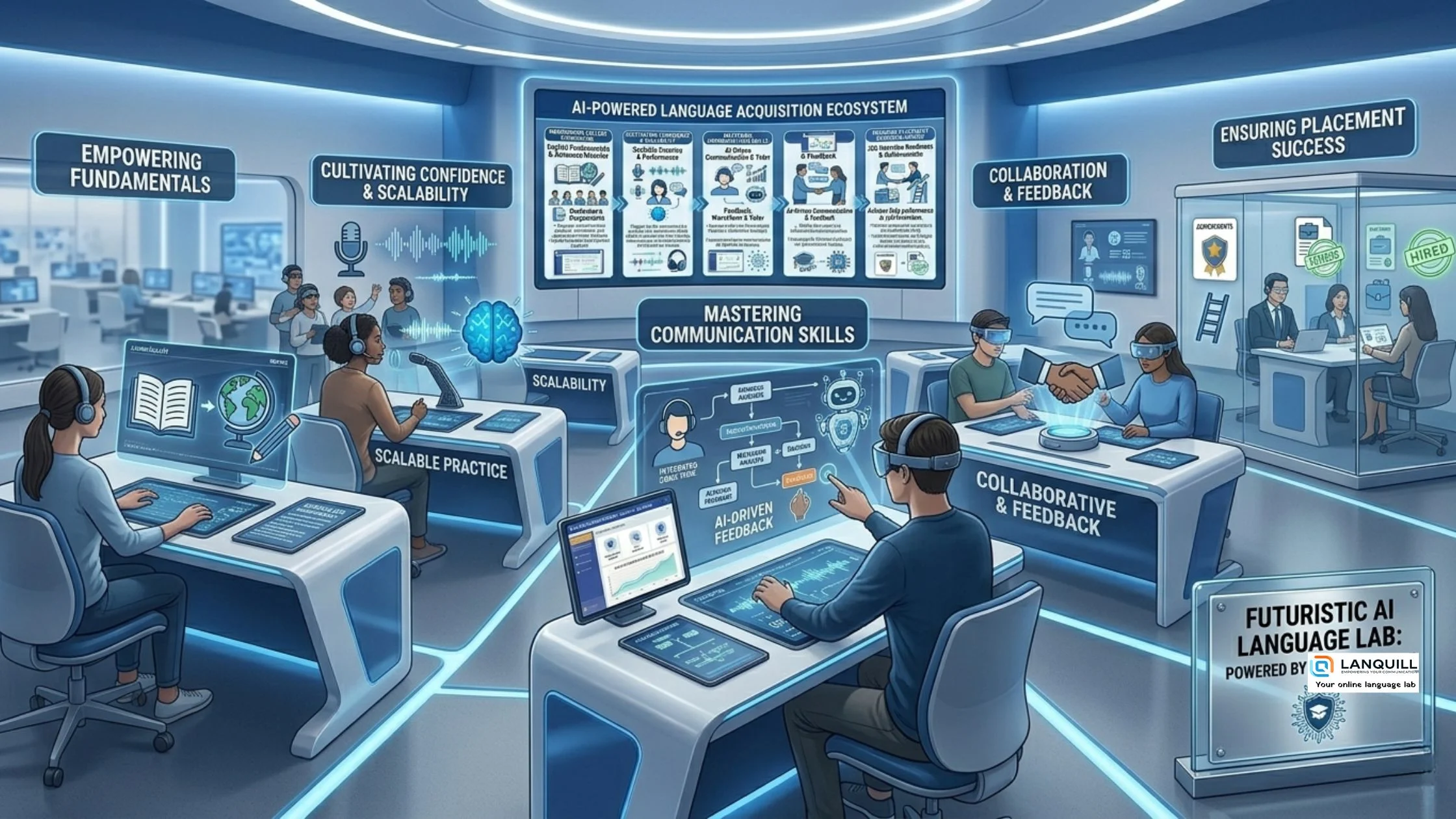
| Feature | Traditional Lab | ✦ AI Lab |
|---|---|---|
| Speed of Results | ✗ Slow | ✓ Quick results |
| Learning Style | ✗ One-size-fits-all | ✓ Customised instruction |
| Feedback | ✗ Delayed / manual | ✓ Timely, automatic |
| Implementation | ✗ Heavy infrastructure | ✓ Efficient, scalable |
| Student Engagement | ✗ Low | ✓ High |
Institutions looking to stay competitive must transition toward AI-powered solutions.
How to Choose the Right English Language Lab
Some important considerations while opting for an English language lab for colleges include:
Prospects for Language Labs in Colleges
For the future of an English language lab for colleges, some important factors are shaping the next generation of communication training:
AI-Based Learning Models
Adaptive algorithms that evolve with each student's performance patterns.
Real-Time Performance Analysis
Instant insights into speaking accuracy, grammar, and fluency metrics.
Continuous Skill-Building
Always-on platforms that enable students to practise anytime, anywhere.
Incorporation with Placement Training
Seamless integration with mock interviews and career-readiness modules.
Conclusion
For colleges, an English language lab is not an optional amenity anymore but an integral part of modern-day education.With communication abilities becoming a prerequisite for securing jobs, colleges need to consider scalable, efficient, and future-oriented solutions. Prior to implementation, the English language lab cost in India also needs to be considered.
Ready to Elevate Your College's Communication Training?
Schedule a demonstration to discover how Lanquill can revolutionise your institution.
Book a Demo →FAQs
It is a tool that helps college-going individuals develop their communication skills using technology — through structured listening, speaking, pronunciation, and grammar activities.
It will help in improving communication skills and will help in getting placed effectively in organisations by boosting confidence, fluency, and interview readiness.
The traditional language lab makes use of static data with manual evaluation. In the case of AI-based language labs, personalised learning, real-time feedback, and adaptive training can be experienced.
Yes, as it will help bridge the communication gap that exists in students, which is one of the primary reasons behind poor placement outcomes.
Speech recognition, personalised learning paths, performance tracking, grammar and fluency modules, mock interview practice, and progress analytics.
Related Articles

How Colleges Can Improve Student Placement Readiness
Learn how colleges can improve student placement readiness through communication training, AI tools, and structured learning systems.
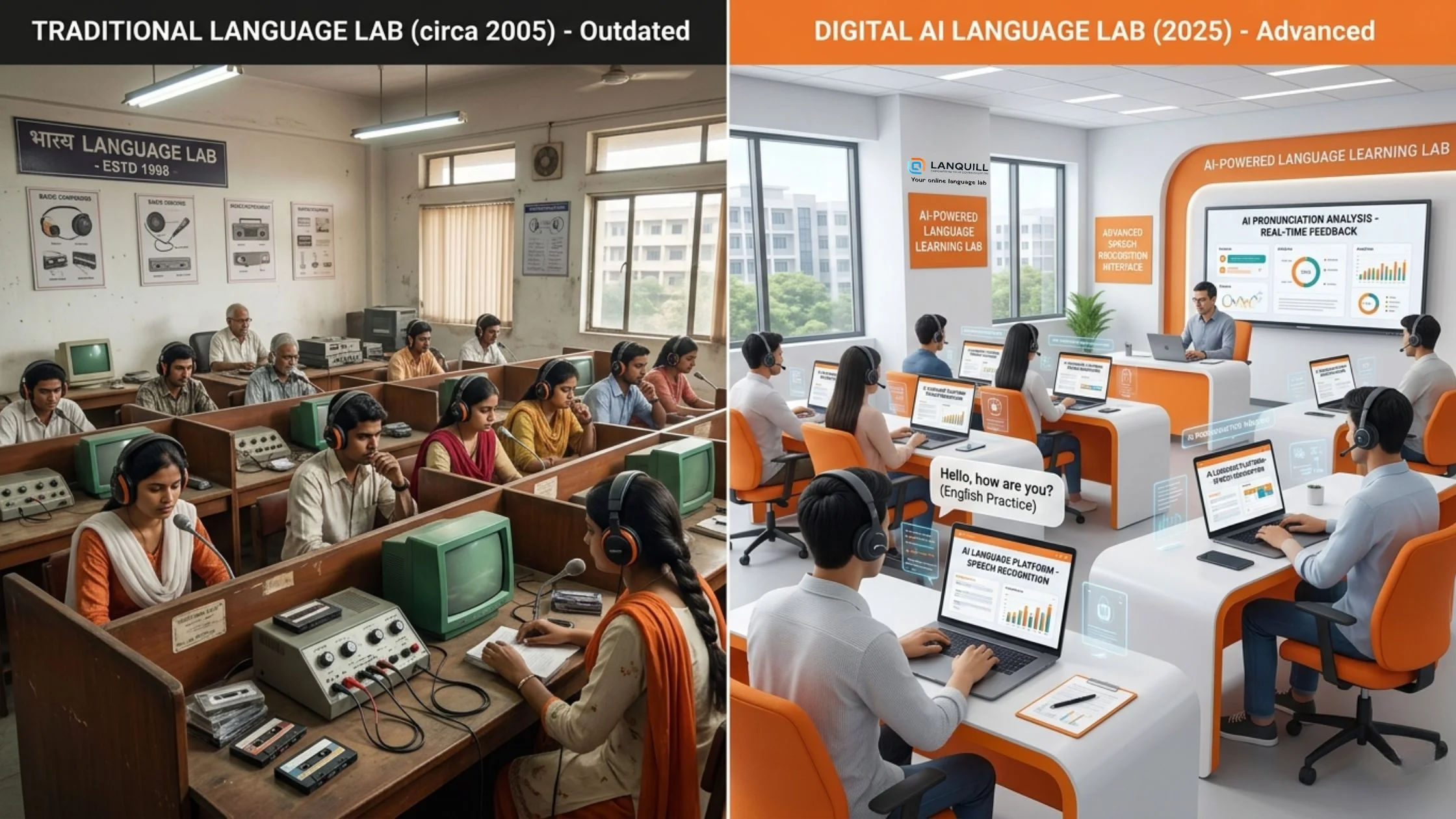
Traditional vs Digital Language Labs for Colleges (2026 Guide)
Compare traditional vs digital language labs and discover which is better for colleges to improve communication skills and placement outcomes.

Why Every College Needs an AI Language Lab in 2026
Discover why every college needs an AI language lab in 2026 to improve student communication, placement readiness, and learning outcomes.

From Classroom to Career: How CEFR-Aligned English Courses Build Employability
In today’s globalized job market, strong English communication skills are no longer optional — they’re essential. Educational institutions play a crucial role in helping students bridge the gap between classroom learning and workplace communication.

How Modern English Language Labs Are Transforming Communication Skills in Classrooms
In today’s digital-first academic world, English language proficiency is no longer just a subject- it’s a critical life skill. While traditional spoken English classes have helped many learners, they often lack the structure, interactivity,
English Spoken Classes vs English Language Lab: Key Differences You Should Know
When it comes to improving spoken English, two popular learning options stand out — English spoken classes and English language labs. Both aim to enhance communication skills, pronunciation, and fluency, but they differ significantly in approach, technology, and results.