
How Colleges Can Improve Student Placement Readiness with Communication Training
Placement rates are your college's most visible metric — and communication skills are the hidden lever that moves them. Here's the complete, ROI-backed blueprint.
Every year, colleges pour resources into technical curriculum, lab infrastructure, and faculty credentials. Yet when hiring managers are asked why they pass on fresh graduates, the answer is rarely "they didn't know enough code" or "their GPA was too low."
The answer, overwhelmingly, is this: they couldn't communicate.
According to the National Association of Colleges and Employers (NACE), communication skills have ranked as the #1 attribute employers seek in new hires for over a decade. Yet most colleges treat communication as a soft elective — an afterthought — rather than as a core pillar of placement readiness. That gap is costing students their dream offers, and costing institutions their rankings, reputation, and recruiter relationships.
This guide breaks down exactly how colleges can improve student placement readiness by embedding structured communication training into their academic and pre-placement ecosystem — and what the measurable return on that investment looks like.
Why Communication Training Is a Placement Strategy, Not a Soft Skill
There is a persistent misconception in academia: that communication is a personality trait, not a teachable skill. This framing is not just wrong — it is actively harmful to placement outcomes.
Communication competence is a structured discipline. It encompasses verbal fluency, active listening, structured thinking, non-verbal presence, professional writing, and the ability to adapt your message to your audience. All of these are learnable. All of them are measurable. And all of them directly affect whether a student gets hired.
"Technical skills get students to the interview. Communication skills get them the offer. And communication skills keep them employed."
— Senior HR Manager, Infosys Campus HiringWhen institutions frame communication as a "placement readiness" issue — not merely a "soft skills" issue — the investment calculus changes completely. It stops being a feel-good workshop and starts being a revenue-generating, ranking-improving, alumni-satisfying strategic asset.
This is precisely why forward-thinking colleges are now investing in dedicated language labs and AI-powered communication platforms as part of their placement infrastructure — not as a cosmetic add-on, but as a core driver of outcomes.
The Real Cost of Skipping Communication Training
Before investing in a solution, college leadership needs to understand the cost of inaction. Poor communication training has measurable, quantifiable consequences that compound over years.
The domino effect is real. One cohort with poor communication skills leads to disappointed recruiters. Disappointed recruiters reduce their campus hiring targets. Fewer companies on campus means lower placement rates. Lower placement rates damage rankings. Lower rankings reduce admissions quality. The cycle is entirely self-reinforcing — and it begins with skipping communication training.
The 5 Pillars of Placement-Focused Communication Training
Effective communication training for placement isn't a single workshop — it is an integrated curriculum across five domains. Here is what best-in-class programs consistently focus on:
Verbal Fluency & Clarity
Structured speaking, clarity of thought, pacing, and confidence in one-on-one and group settings. The foundation everything else builds on.
Interview Communication
STAR method responses, handling stress and unexpected questions, articulating strengths with evidence, and reading interviewer cues.
Group Discussion Skills
Leadership in GDs, effective listening, initiating topics, summarising discussion, and consensus-building without dominating.
Professional Writing
Resume language, cover letters, professional emails, LinkedIn profiles, and workplace writing that signals competence immediately.
Presentation & Pitching
Slide communication, body language, managing Q&A, and simplifying complex technical topics for non-technical audiences.
Colleges that address all five pillars — not just interview coaching in the final semester — see measurably better placement outcomes. The key is starting early and embedding communication into the academic calendar, not treating it as a panic-mode pre-placement sprint.
Related Reading
English Communication Skills: The #1 Reason Students Fail Interviews →
Semester-by-Semester Implementation Roadmap
The single most common mistake placement cells make is introducing communication training in the final year, weeks before campus placements begin. By then, it is too late to build genuine fluency — what students develop is rote rehearsal, and experienced recruiters can tell immediately.
Best-practice institutions build a progressive communication curriculum across all four years:
Year 1 — Foundation
Foundational English fluency & classroom confidence
Personal introductions, classroom presentations, basic professional writing, and removing language inhibition. Goal: every student speaks up without fear. This is where a structured English language lab creates the most lasting impact.
Year 2 — Professional Communication
Email writing, report writing & academic communication
Seminar participation, structured peer debates, business writing fundamentals, and LinkedIn profile development. Goal: professional communication habits become second nature.
Year 3 — Industry Readiness
GD practice, case presentations & internship communication
Group discussion techniques, case-based presentations, technical topic simplification, and communication during internships. Goal: industry-facing communication confidence before the final year pressure arrives.
Year 4 — Placement Conversion
Mock interviews, aptitude integration & offer negotiation
AI-powered mock interview practice, GD workshops with live feedback, resume and cover letter refinement, and salary negotiation communication. Goal: students arrive at placement season polished — not panicked.
How Communication Training Delivers Measurable ROI for Your Institution
This is where the conversation moves from anecdotal to actuarial. The ROI of structured communication training is demonstrable across four dimensions that college leadership cares most about.
Placement Rate Improvement
Colleges that implement structured, multi-semester communication training consistently report 15–30% higher placement rates compared to cohorts without it. When students convert more interview opportunities into offers, the placement percentage rises — improving rankings, accreditation scores, and brand value simultaneously.
- Higher GD-to-interview conversion rates
- More students clearing the HR round on first attempt
- Direct positive impact on NIRF/NAAC placement score components
Higher Average Package (CTC)
Communication-trained students don't just get placed more often — they get placed at higher salary packages. Recruiters routinely offer premium roles to students who demonstrate strong verbal and written communication.
- 12–22% higher average CTC for communication-proficient graduates
- Premium client-facing and managerial-track roles offered first
- Direct boost to your institution's "average CTC" metric
Recruiter Retention and Campus Expansion
When campus recruits perform well in their first 6–12 months, recruiters return — and often increase their hiring quota. Colleges known for producing communication-ready graduates become preferred campuses.
- Exclusive pre-placement offers and faster hiring cycles
- 20–35% year-over-year growth in returning recruiters
- Reduced burden on your placement cell
Ranking and Accreditation Benefits
NAAC, NBA, and NIRF assessments include placement outcomes and industry feedback as key criteria. A structured, documented communication training program also serves as evidence of quality pedagogy — directly influencing accreditation scores.
- Documented training improves accreditation portfolio scores
- Evidence of quality pedagogy for assessment committees
- Admissions inquiry growth from improved placement reputation
What Recruiters Want vs. What Students Actually Deliver
Based on aggregated industry surveys and placement cell data across sectors, here is what recruiters consistently say they are looking for — and the exact communication behaviours where students fall short:
| What Recruiters Want | Where Students Fall Short | ✦ Training Fix |
|---|---|---|
| Clarity when explaining technical concepts | Jargon-heavy answers with no audience awareness | Audience-adaptive speaking modules |
| Confidence without arrogance | Overly rehearsed scripts or visible nervousness | AI mock interviews with real-time feedback |
| Active listening & relevant responses | Students answer a different question than was asked | Listening & comprehension drills |
| Professional written communication | Informal language, poor formatting, wrong tone | Business writing curriculum from Year 2 |
| Balanced GD contribution | Either silent or monopolises the discussion | Facilitated GD practice with role rotation |
| Self-awareness and growth mindset | Inability to reflect on weaknesses honestly | Recorded self-review and peer feedback loops |
The gap between what is wanted and what is delivered is entirely bridgeable. It requires intentional training — not intelligence, not personality, not luck.
The Role of an AI Language Lab in Scaling Communication Readiness
Here is the honest challenge every placement coordinator faces: you have 400 students and 3 months before campus season. You cannot personally give every student individualised communication coaching. Traditional methods — one workshop, one trainer, one GD session — simply do not scale.
This is where an AI-powered language lab fundamentally changes the equation. Unlike traditional language labs that provide passive listening exercises, modern AI language labs offer interactive, personalised, data-driven practice at scale. Every student gets individualised feedback on their pronunciation, fluency, grammar, interview responses, and GD participation — automatically, without requiring additional trainer hours.
Deep Dive
Why Every College Needs an AI Language Lab in 2026 →
Key capabilities that directly improve placement readiness include: AI-driven mock interview simulations with instant scoring, group discussion modelling with topic variety, pronunciation and fluency coaching with real-time correction, and progress dashboards that let placement coordinators track every student's communication improvement over time.
If your institution is evaluating whether to move from a traditional setup to a digital or AI platform, our comparison of traditional vs digital language labs provides a detailed, unbiased breakdown to help you decide.
How to Actually Implement This: A Practical Checklist
Theory without execution is just ambition. Here is what implementation looks like in practice, broken into five concrete steps:
Step 1
Conduct a communication skills audit
Before designing any program, assess the current baseline. Survey final-year students and recent alumni. Collect recruiter feedback from the last two to three placement cycles. The program design should be gap-driven, not generic.
Step 2
Embed communication in credit-bearing curriculum
One of the highest-impact changes a college can make is giving communication courses actual academic credits. When communication is optional, students skip it. When it carries academic weight and is integrated with technical courses, attendance and engagement rise dramatically.
Step 3
Train the trainers — or bring in specialists
Faculty who deliver communication training need specialised preparation. A faculty member with an engineering background is not equipped to coach interview communication without specific training. Invest in dedicated communication faculty or certified trainers with corporate recruitment backgrounds.
Step 4
Deploy AI tools to scale practice volume
AI-powered mock interview platforms, recorded presentation feedback tools, and automated grammar and tone analysers allow colleges to give every student individualised feedback at scale. Students get more practice repetitions; placement cells get better diagnostic data. This is the leverage point that makes large-cohort transformation possible.
Step 5
Close the feedback loop with industry
Run quarterly feedback sessions with your top recruiting companies. Ask specifically what communication behaviours they see — positive and negative — in your graduates. Colleges that treat recruiters as curriculum co-designers consistently produce students who are precisely calibrated for industry expectations.
Implementation Checklist
- Communication skills audit completed with recruiter and alumni input
- Credit-bearing communication module integrated from Year 1
- Dedicated communication trainers with corporate background onboarded
- AI language lab deployed for mock interviews and GD practice
- Quarterly recruiter feedback loop formalised in placement calendar
- Communication KPIs tracked and included in placement data reports
- Student progress dashboards visible to placement cell and HODs
The Bottom Line
Improving student placement readiness is not a mystery. Recruiters have told us what they want for over a decade. The institutions winning on placement are not necessarily the ones with the most modern labs or the most famous faculty — they are the ones that take communication training seriously as a strategic, year-round, credit-bearing discipline.
The ROI is clear. The implementation path is proven. The only thing standing between a college and meaningfully better placement outcomes is the decision to act — not in the last 60 days before campus season, but right now, starting with the current first-year batch.
Because four years from now, those students will walk into their first recruiter interaction. Whether they walk out with an offer will depend, in no small part, on what their college chose to invest in today. Explore how Lanquill can help your college build that foundation →
Ready to Build a Placement-Ready Institution?
Explore how Lanquill's AI language lab can help your college build the communication foundation students need to get placed.
Book a Demo →Frequently Asked Questions
Communication training should begin from Semester 1 of Year 1. Early intervention removes inhibition and fear, allows gradual skill-building, and ensures students arrive at pre-placement season with genuine fluency rather than last-minute cramming. Placement-focused modules should intensify from Year 3 onwards. A structured English language lab set up from Year 1 creates the most sustainable impact.
An AI language lab provides scalable, individualised practice through mock interviews, GD simulations, pronunciation coaching, and automated feedback — allowing every student to receive personalised communication training, not just those who attend optional workshops. It removes the bandwidth bottleneck that limits traditional coaching.
The five most critical skills are: structured verbal communication, interview articulation (STAR method), group discussion contribution, professional writing, and presentation fluency. All five are teachable and measurable — and all five are consistently cited by recruiters as differentiating factors.
Key KPIs include: GD-to-interview conversion rate, HR round clearance percentage, average CTC improvement, recruiter satisfaction scores, and year-on-year growth in returning companies.
Absolutely not. Engineering, pharmacy, B.Sc, BCA, and all technical programme students face the same communication-heavy hiring processes — GDs, HR interviews, and client-facing roles. In fact, technical graduates are more likely to underestimate communication as a placement factor, making proactive training even more critical for STEM colleges.
Yes — and often more dramatically than tier-1 colleges. The baseline gap tends to be larger, which means the improvement potential is greater. Several tier-2 institutions have moved from below-average to top-quartile placement rates within two to three cycles of consistent, well-executed communication training.
Digital and AI-powered labs significantly outperform traditional setups for placement readiness because they enable interactive, individualised, and scalable practice rather than passive listening.
Related Articles
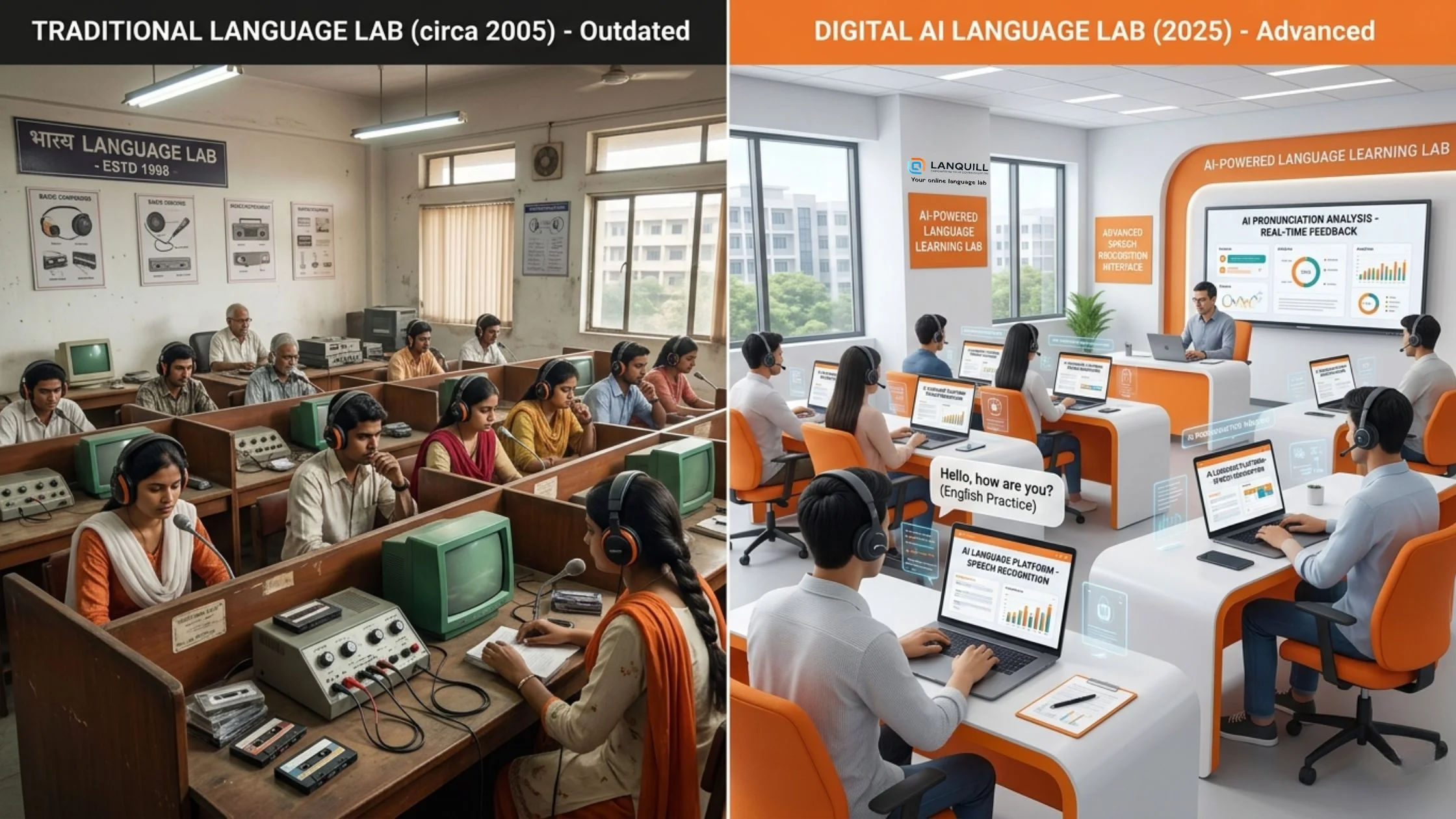
Traditional vs Digital Language Labs for Colleges (2026 Guide)
Compare traditional vs digital language labs and discover which is better for colleges to improve communication skills and placement outcomes.
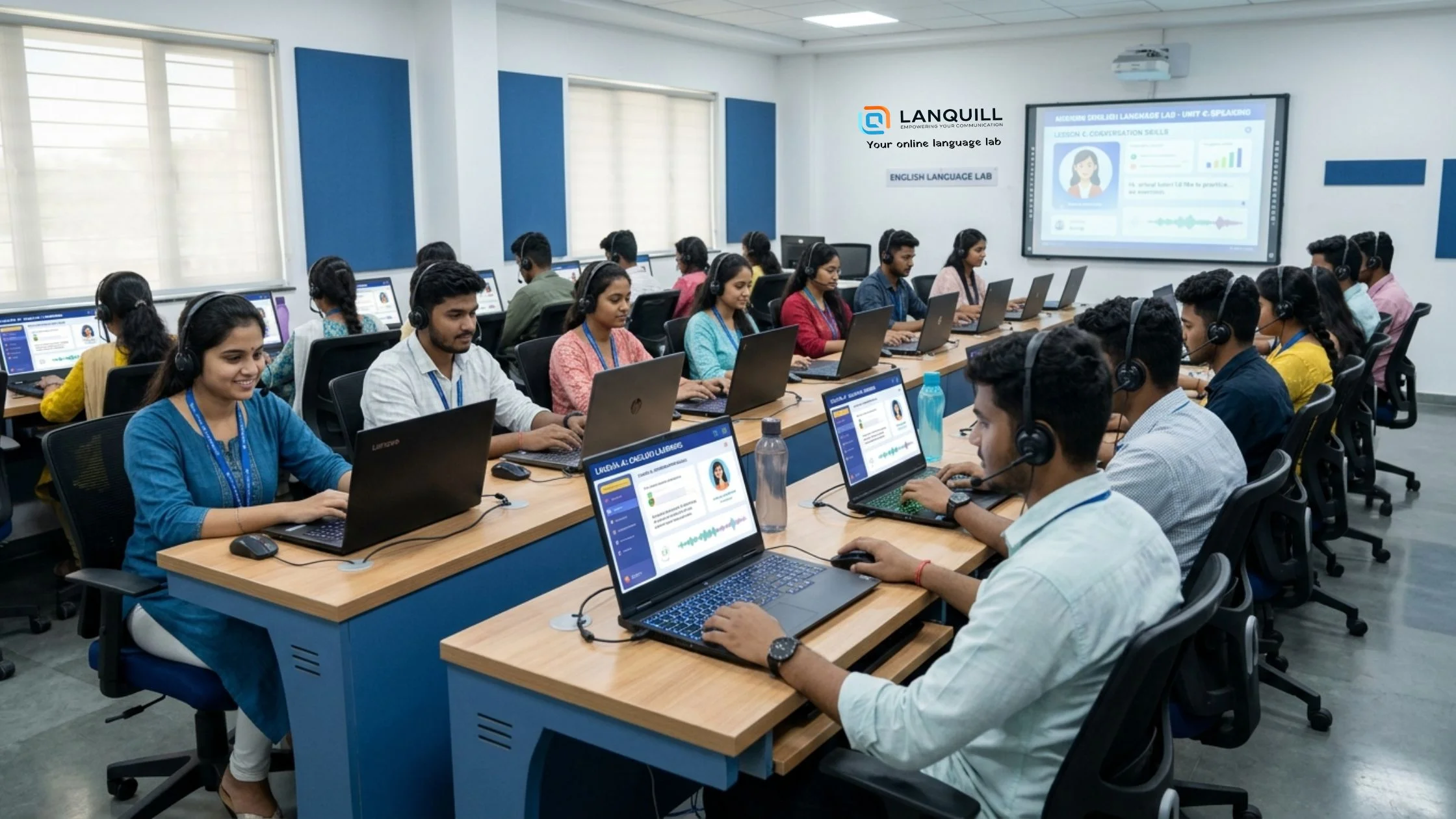
What is an English Language Lab for Colleges? Benefits Explained
Learn what an English language lab for colleges is and how it improves communication skills, placement readiness, and student outcomes.
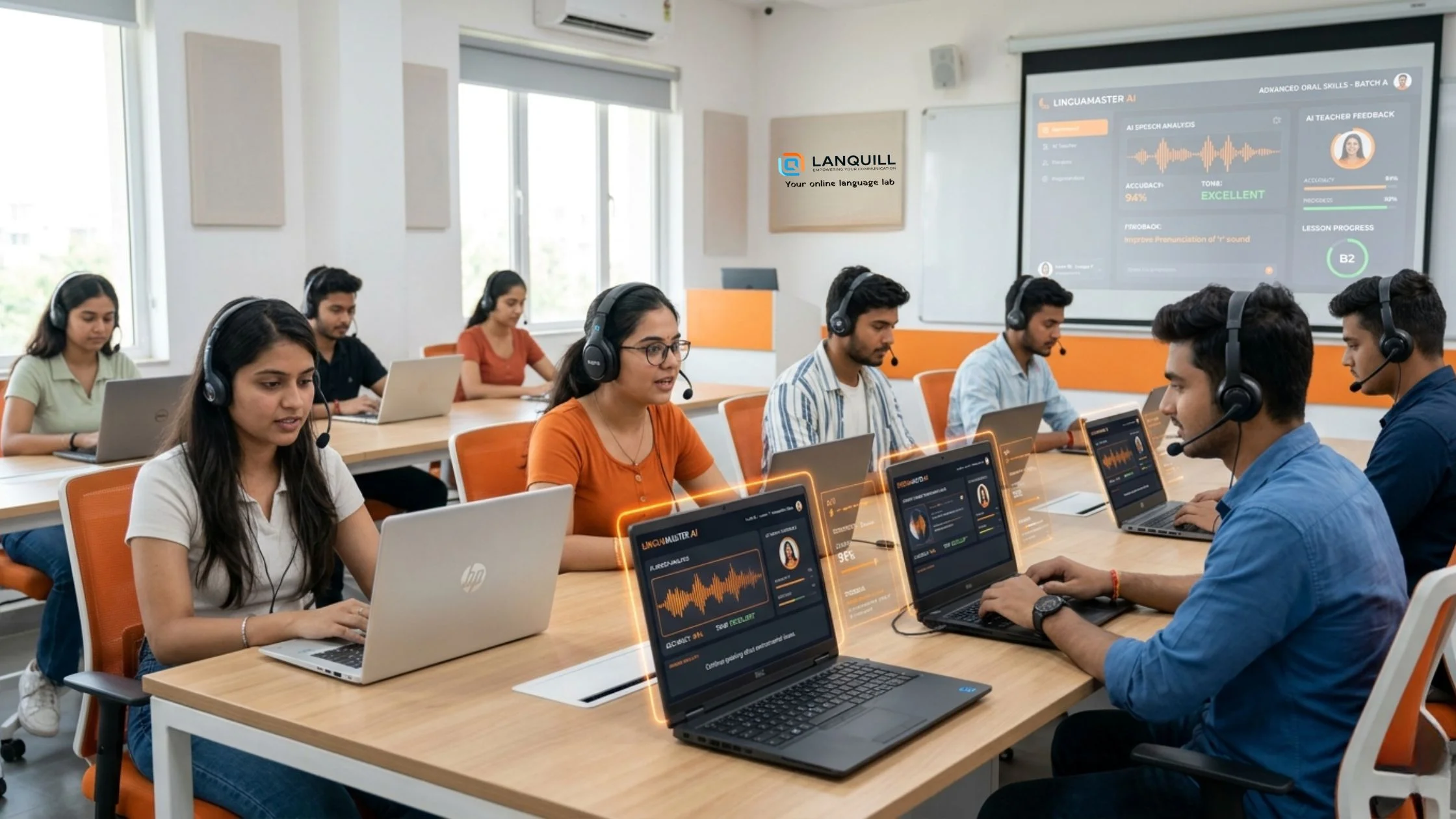
Why Every College Needs an AI Language Lab in 2026
Discover why every college needs an AI language lab in 2026 to improve student communication, placement readiness, and learning outcomes.
From Classroom to Career: How CEFR-Aligned English Courses Build Employability
In today’s globalized job market, strong English communication skills are no longer optional — they’re essential. Educational institutions play a crucial role in helping students bridge the gap between classroom learning and workplace communication.
How Modern English Language Labs Are Transforming Communication Skills in Classrooms
In today’s digital-first academic world, English language proficiency is no longer just a subject- it’s a critical life skill. While traditional spoken English classes have helped many learners, they often lack the structure, interactivity,
English Spoken Classes vs English Language Lab: Key Differences You Should Know
When it comes to improving spoken English, two popular learning options stand out — English spoken classes and English language labs. Both aim to enhance communication skills, pronunciation, and fluency, but they differ significantly in approach, technology, and results.