
Traditional vs Digital Language Labs for Colleges (2026 Guide)
Not all language labs deliver the same results. Here's a clear, unbiased breakdown of traditional vs digital vs AI language labs — and which one actually moves the needle on placement outcomes.
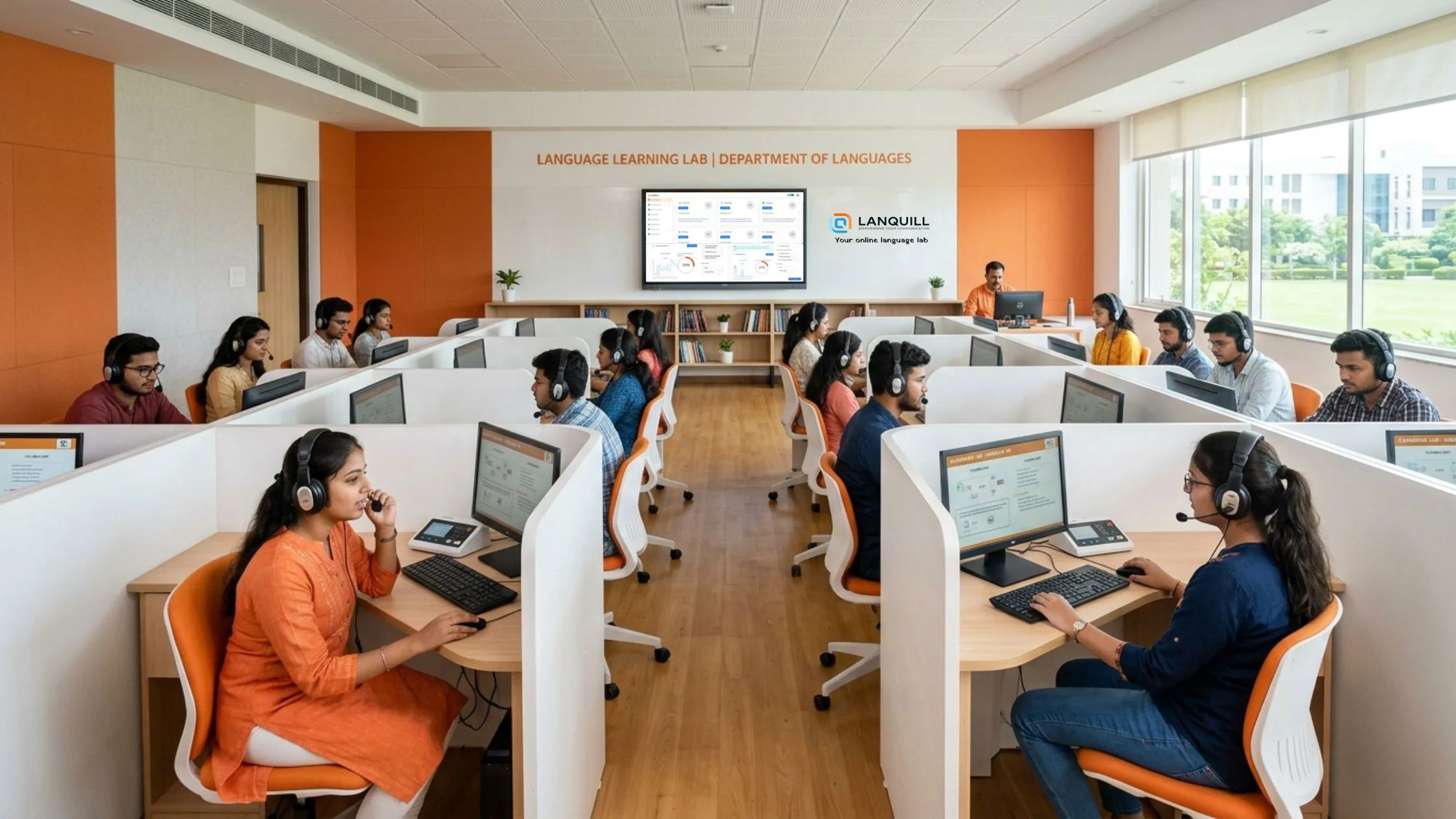
It is not enough to just know; communication skills have become indispensable for success and placements. However, there are many universities that use antiquated means to develop their students' verbal abilities and communications skills.
This brings us to a critical point:
"Would traditional universities continue using traditional setups, or would they opt for a more contemporary approach?"
To determine the answer, one must analyze the differences between traditional and digital language laboratories and figure out what would be the most effective approach in 2026. As universities undergo transformation, they look into futuristic tools such as the AI Language Lab to stay ahead of the curve.
What is a Traditional Language Lab?
The traditional language lab is a hardware-based platform aimed at developing listening and speech skills among the learners.
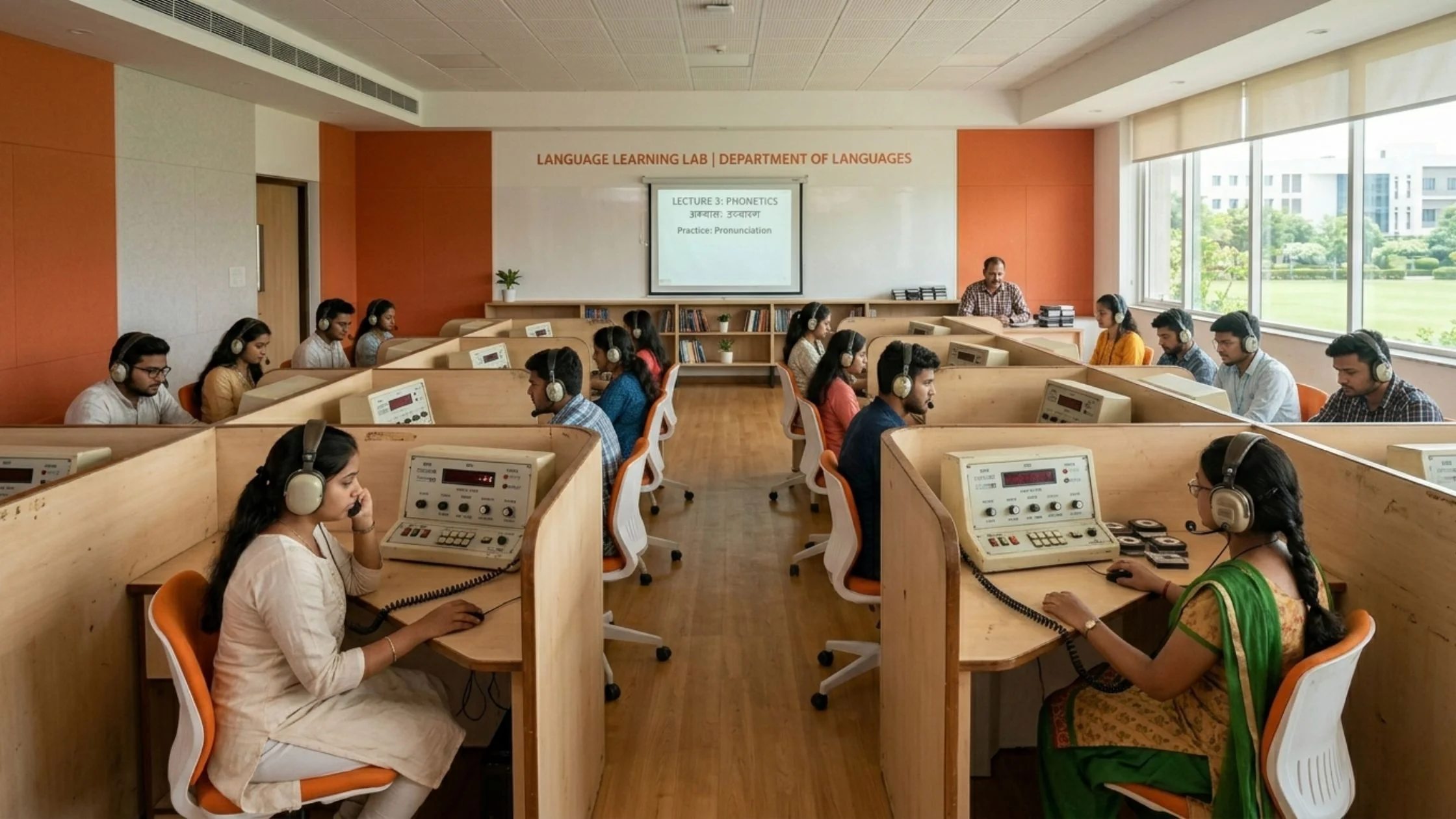
Traditional language lab consists of:
Audio Systems
Centralised speaker and playback infrastructure
Headsets
Individual student audio stations
Recorded Lessons
Static, pre-recorded instructional content
Guided Sessions by Teachers
Manual instruction and evaluation by faculty
Traditional language labs gained popularity among colleges to facilitate communication training. For more information about traditional language labs, visit English Language Lab for Colleges.
What is a Digital Language Lab?
Digital language lab is a software-based platform that makes use of technology to offer interactive communication training.

Digital language labs make use of English language lab software, which includes:
Interactive Activities
Engaging exercises beyond passive listening
Multimedia Elements
Video, audio and visual content for richer learning
Progress Monitoring
Basic analytics to track improvements
Self-Paced Training
Learn at your own speed and convenience
The digital laboratory offers greater flexibility and engagement than its conventional counterpart.
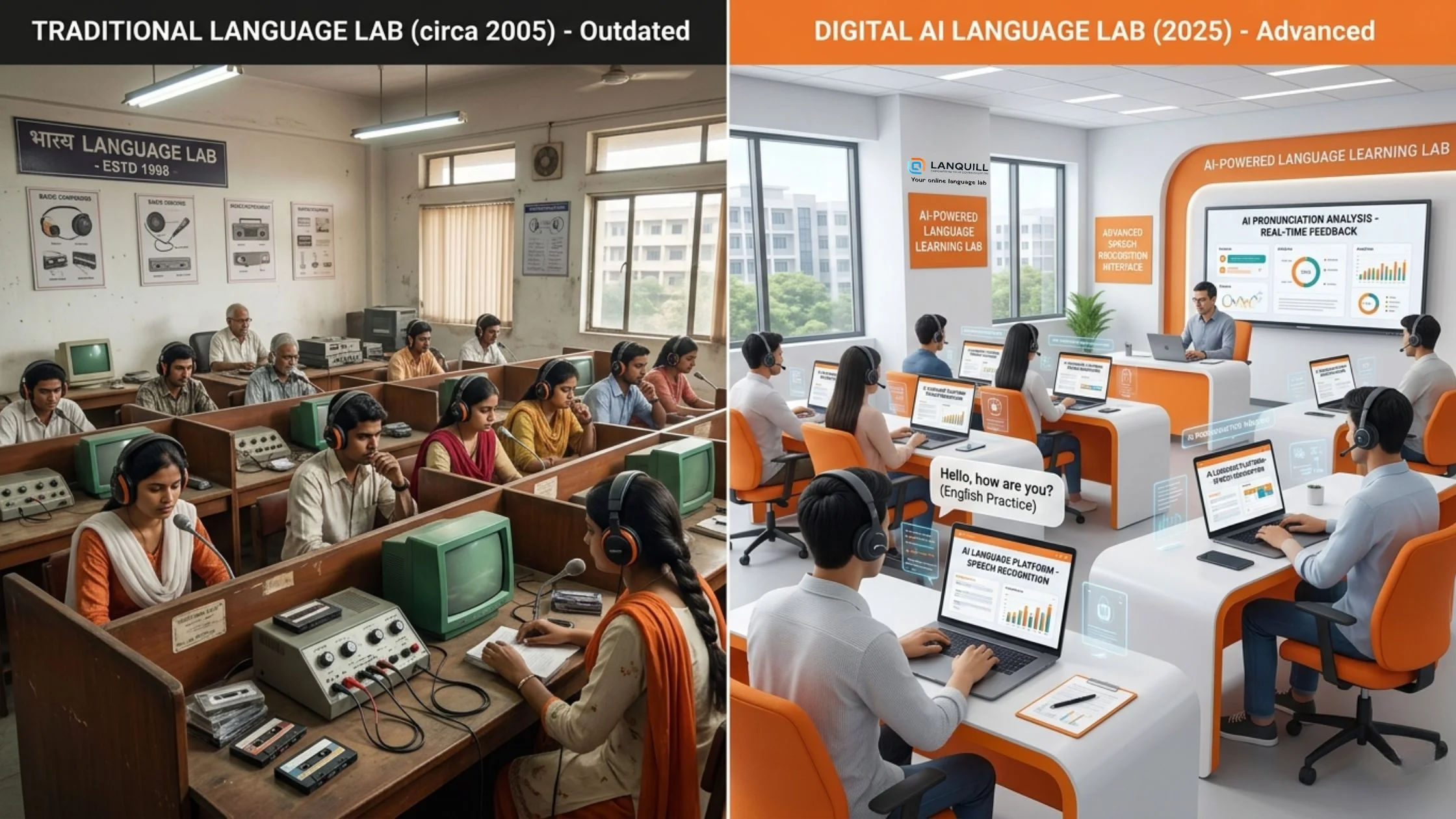
Comparing Traditional and Digital Language Labs: Critical Differences
| Feature | Traditional Lab | Digital Lab |
|---|---|---|
| Learning Style | ✗ Passive listening | ~ Interactive learning |
| Personalization | ✗ None | ~ Limited personalization |
| Feedback | ✗ Manual | ~ Semi-automated |
| Scalability | ✗ Low | ~ Moderate |
| Engagement | ✗ Low | ~ Medium |
| Accessibility | ✗ Lab-dependent | ~ Anywhere access |
Even though digital language laboratories offer enhanced accessibility and engagement levels, they remain constrained by personalization and immediate feedback capabilities.
The Limitations of Traditional Language Labs
Though adopted early, conventional language laboratories exhibit several critical weaknesses:
Absence of Personalization
No differentiation of course material based on learners' proficiency level.
Manual Evaluation
Performance evaluated manually by faculty members, consuming valuable time.
Minimal Student Engagement
Low level of learner involvement because of the passive learning mode.
Poor Scalability
Challenging to deploy for large class batches — infrastructure costs multiply.
The Advantages of Digital Language Labs
4 core benefits that set digital labs apart from traditional ones
Interactive Learning
Students get interactive multimedia exercises that keep them actively engaged throughout sessions.
Self-Paced Training
Students can train themselves based on their own pace — no pressure to keep up with the class.
Improved Accessibility
Can be used outside physical laboratories, giving students flexibility to practice anywhere, anytime.
Progress Monitoring
Basic analytics for tracking improvements over time and identifying areas that need attention.
Why Digital Language Labs are Insufficient in 2026
Despite being a breakthrough technology, digital language labs are still lacking in critical areas:
⚠ Still Missing in Digital Labs
This is why many organizations have begun considering an AI language lab for colleges.
Emerging Trends: Rise of AI Language Labs
An AI language lab for colleges marks the next generation of communication skills training programs. Such systems provide:
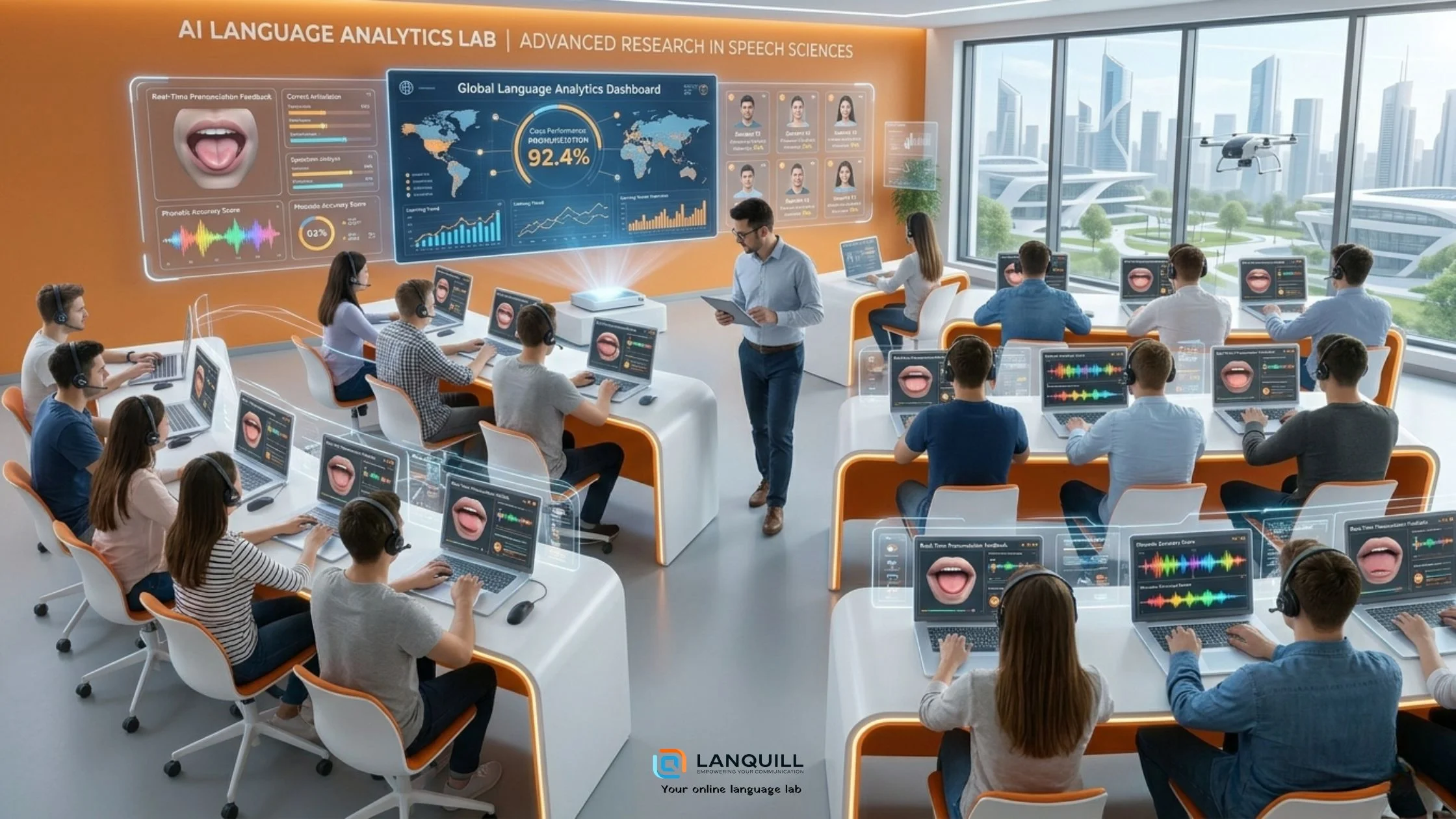
Real-Time Speech Analysis
Instant evaluation of pronunciation, tone, and clarity as students speak.
Instantaneous Fluency & Grammar Feedback
AI detects errors on the fly and provides targeted correction — no waiting for a teacher.
Individualized Learning Paths
Adaptive algorithms tailor content to each learner's strengths and gaps.
Interview Practice Sessions
Mock interview simulations that prepare students for real-world recruitment scenarios.
Outcome-oriented institutions are opting for AI-powered solutions.
Traditional vs Digital vs AI: Final Comparison
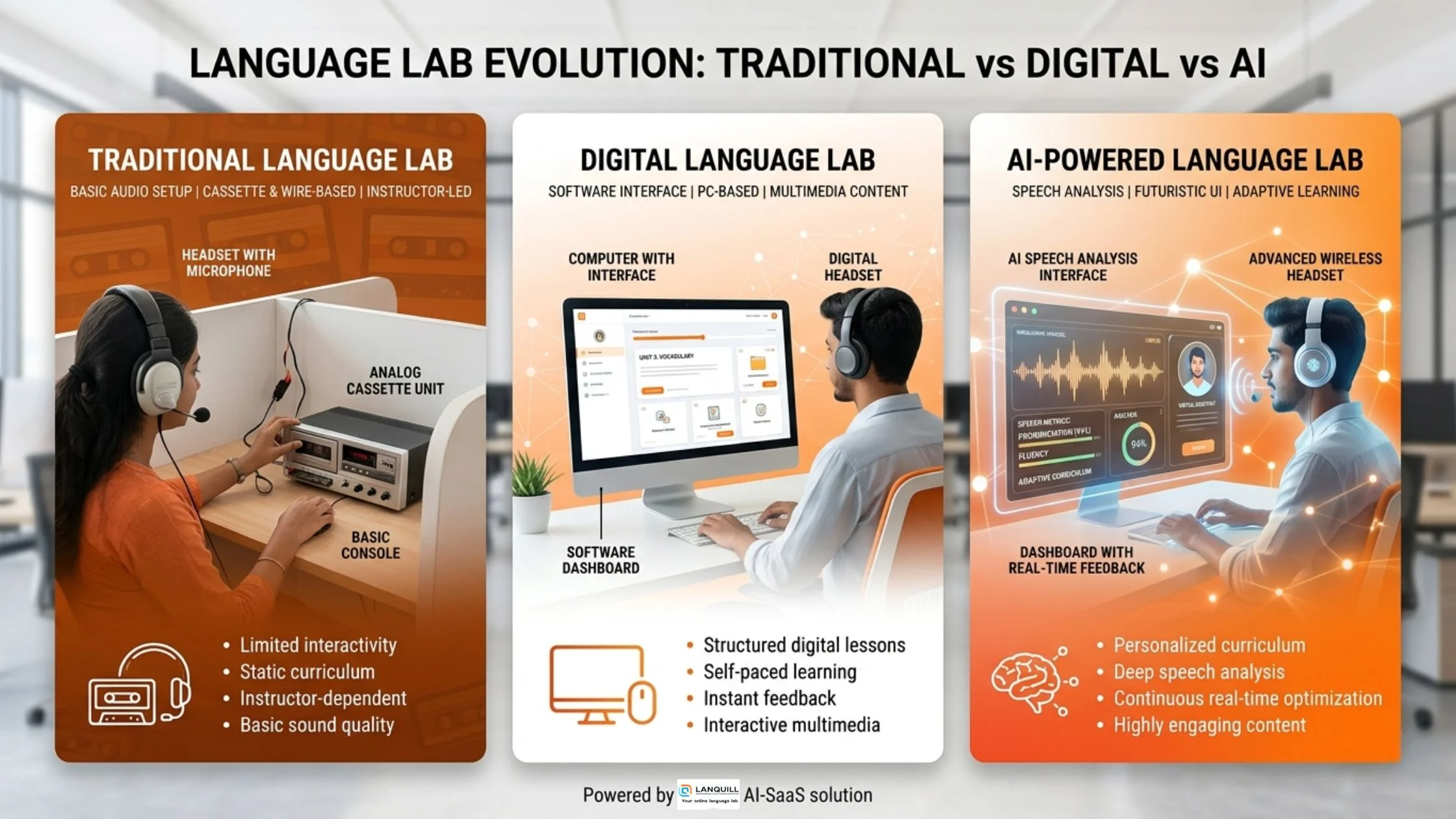
| Feature | Traditional | Digital | ✦ AI Lab |
|---|---|---|---|
| Personalization | ❌ | ⚠️ Limited | ✅ Advanced |
| Feedback | ❌ Manual | ⚠️ Basic | ✅ Real-time |
| Engagement | ❌ Low | ⚠️ Medium | ✅ High |
| Scalability | ❌ Low | ⚠️ Medium | ✅ High |
| Placement Readiness | ❌ Weak | ⚠️ Moderate | ✅ Strong |
Effect on Placement Preparedness
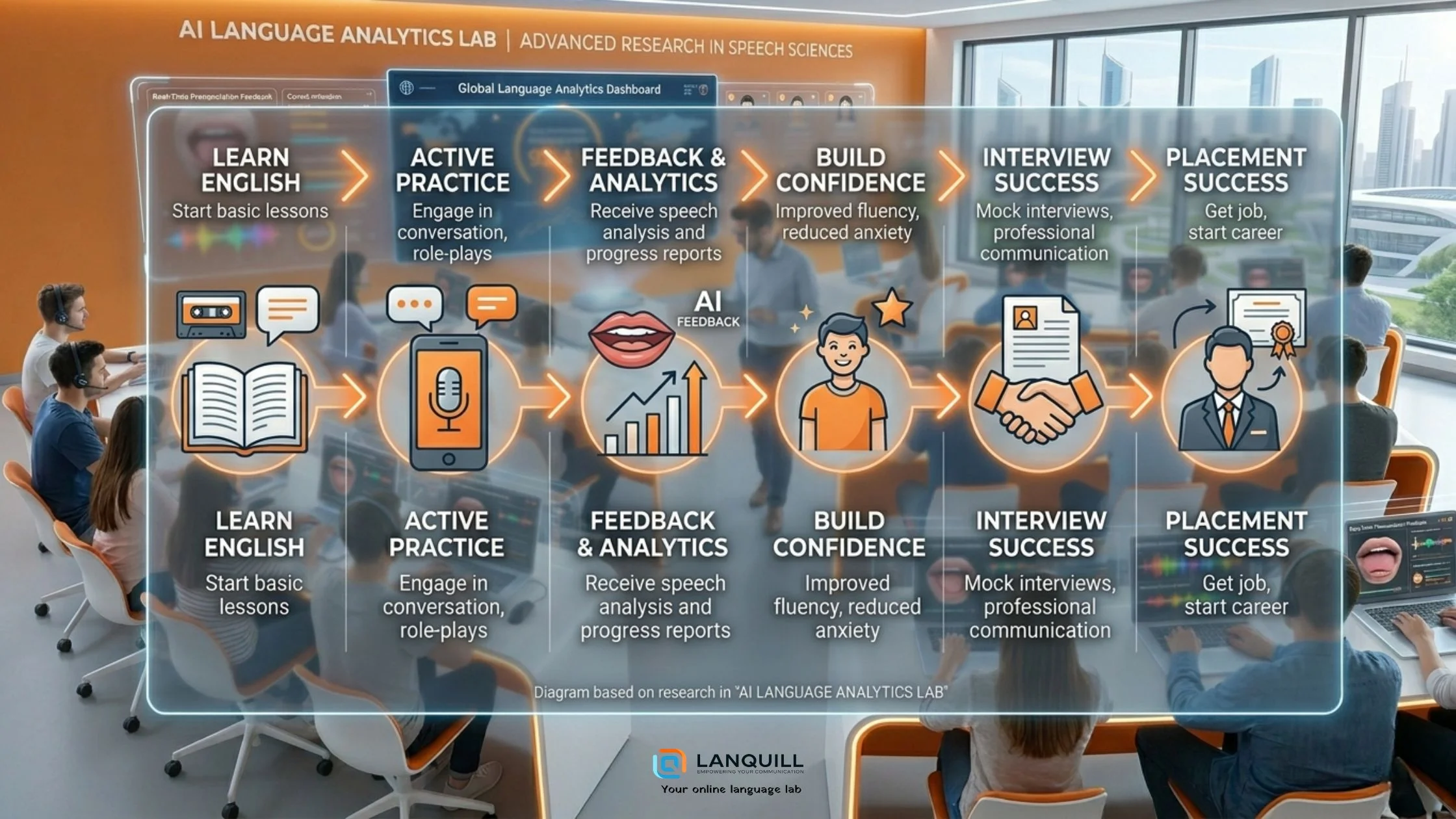
Colleges which invest in new solutions get huge improvement in placement. Using new-age solutions, learners are able to:
Mock Interviews
Practice real interview scenarios repeatedly until truly confident.
Communication Confidence
Build fluency and confidence — from nervous to articulate.
Immediate Feedback
Correct mistakes in the moment, not days later.
Institutions aiming to improve student placement readiness must move beyond traditional methods.
How to Choose the Right Language Lab for Your College
During the selection process, take into consideration such aspects as:
Personalization
Adapts to each student's individual learning level
Feedback Capabilities
Real-time, automated and actionable correction
Scalability for Large Groups
Handles hundreds of students without degradation
Placement Training Integration
Built-in mock interviews and career readiness tools
Reporting & Analytics
Detailed performance dashboards for faculty review
Choosing an AI-powered language lab solution ensures long-term value and better student outcomes.
The Future of Language Labs in Colleges
The future lies in three powerful pillars shaping the next generation of communication training:
AI Technology
Adaptive algorithms that evolve with every student session.
Real-Time Performance Analysis
Instant insights into speaking accuracy, grammar, and fluency metrics.
Constant Skill-Building
Always-on platforms enabling students to practice anytime, anywhere.
To learn more, check why your college needs an AI language lab.
Conclusion
The ongoing discussion concerning the pros and cons of a traditional versus digital language lab makes it clear that both formats have their drawbacks in today's rapidly changing world.
Although the digital version is a step forward, it fails to provide the degree of personalization and intelligence necessary for contemporary communication training.
The AI language lab for colleges turns out to be the best choice due to its scalability, personalization, and instant feedback options. One should also consider checking the English language lab price in India before purchasing.
Ready for a Modern Language Lab Upgrade at Your College?
Helping your students master communication skills and increase placement success — AI language labs are here for the future.
Get in Touch Now →FAQs
Traditional language labs are based on hardware and passive learning, whereas digital language labs rely on software and interactive modules, offering better engagement and flexibility.
Digital language labs are superior to traditional ones because of their interactivity and accessibility; however, AI language labs yield the best outcomes for students.
Digital language labs enhance learning but fail to incorporate advanced capabilities such as real-time feedback and customization that modern students need.
An AI language lab uses artificial intelligence to provide personalized learning, real-time feedback, and advanced communication training tailored to each student.
An AI language lab utilizes artificial intelligence to deliver customized learning experiences, real-time feedback, and superior communication training that directly boosts placement outcomes.
Related Articles

How Colleges Can Improve Student Placement Readiness
Learn how colleges can improve student placement readiness through communication training, AI tools, and structured learning systems.

What is an English Language Lab for Colleges? Benefits Explained
Learn what an English language lab for colleges is and how it improves communication skills, placement readiness, and student outcomes.
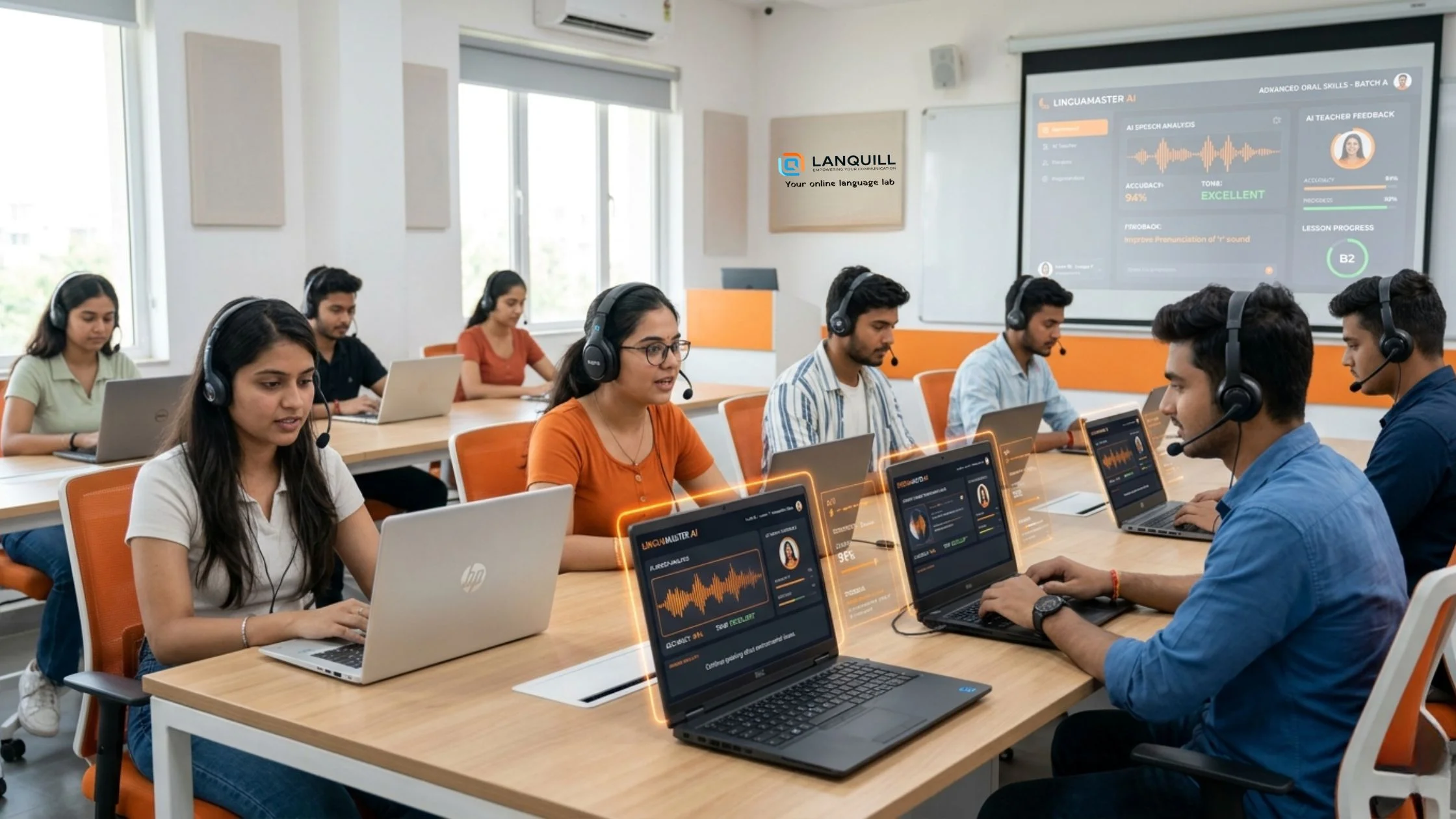
Why Every College Needs an AI Language Lab in 2026
Discover why every college needs an AI language lab in 2026 to improve student communication, placement readiness, and learning outcomes.

From Classroom to Career: How CEFR-Aligned English Courses Build Employability
In today’s globalized job market, strong English communication skills are no longer optional — they’re essential. Educational institutions play a crucial role in helping students bridge the gap between classroom learning and workplace communication.
How Modern English Language Labs Are Transforming Communication Skills in Classrooms
In today’s digital-first academic world, English language proficiency is no longer just a subject- it’s a critical life skill. While traditional spoken English classes have helped many learners, they often lack the structure, interactivity,
English Spoken Classes vs English Language Lab: Key Differences You Should Know
When it comes to improving spoken English, two popular learning options stand out — English spoken classes and English language labs. Both aim to enhance communication skills, pronunciation, and fluency, but they differ significantly in approach, technology, and results.